
S1 E2-Part 2:
Why Do Enterprises Buy CLM?
Contracts are the pulse of your entire business. In Episode 2, Part 1 we explored why legal and procurement are often the first teams to adopt CLM. In Part 2 of Episode 2, we bring the focus on sales, finance and IT. Ready to deep-dive to see how a cross-functional approach to CLM turns siloed data into shared intelligence.
- Last Updated : March 25, 2026
- 5 min
- by Gordon Thompson
What’s Covered in This Episode:
- Sales: Unlocking contracting intelligence to accelerate velocity and close deals faster
- Finance: Building financial guardrails into contracts to ensure predictable revenue and cash flow
- IT: Deploying scalable, mission-critical infrastructure for seamless integrations and secure systems that evolve with the business
“(When) CLM is bought to fix one department's problems, its impact stays limited. But when it's deployed across the business, it becomes the operating system of the enterprise.”
Key moments

1:05
For sales, only 2 things really matter

2:47
Finance isn't about reconciling. They're also using contracts to predict
3:58
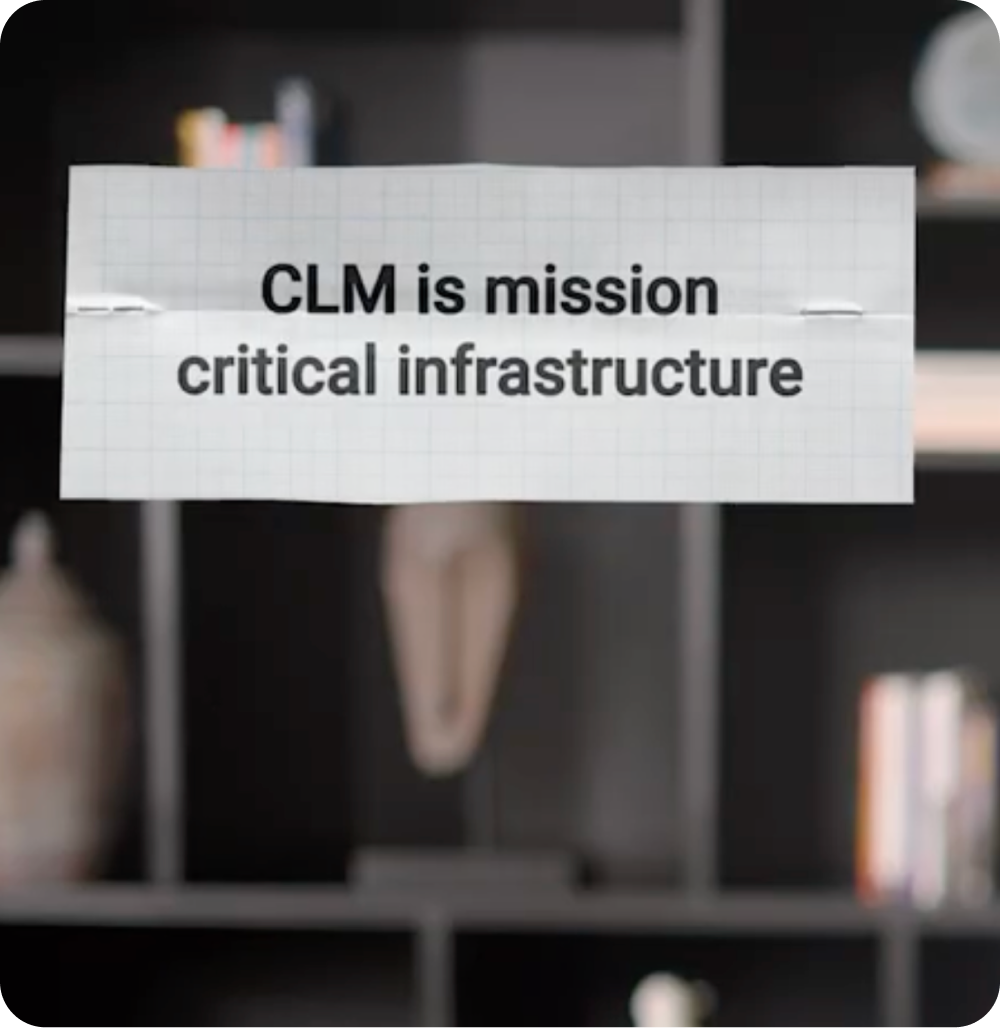
For IT, CLM is mission critical infrastructure
4:42
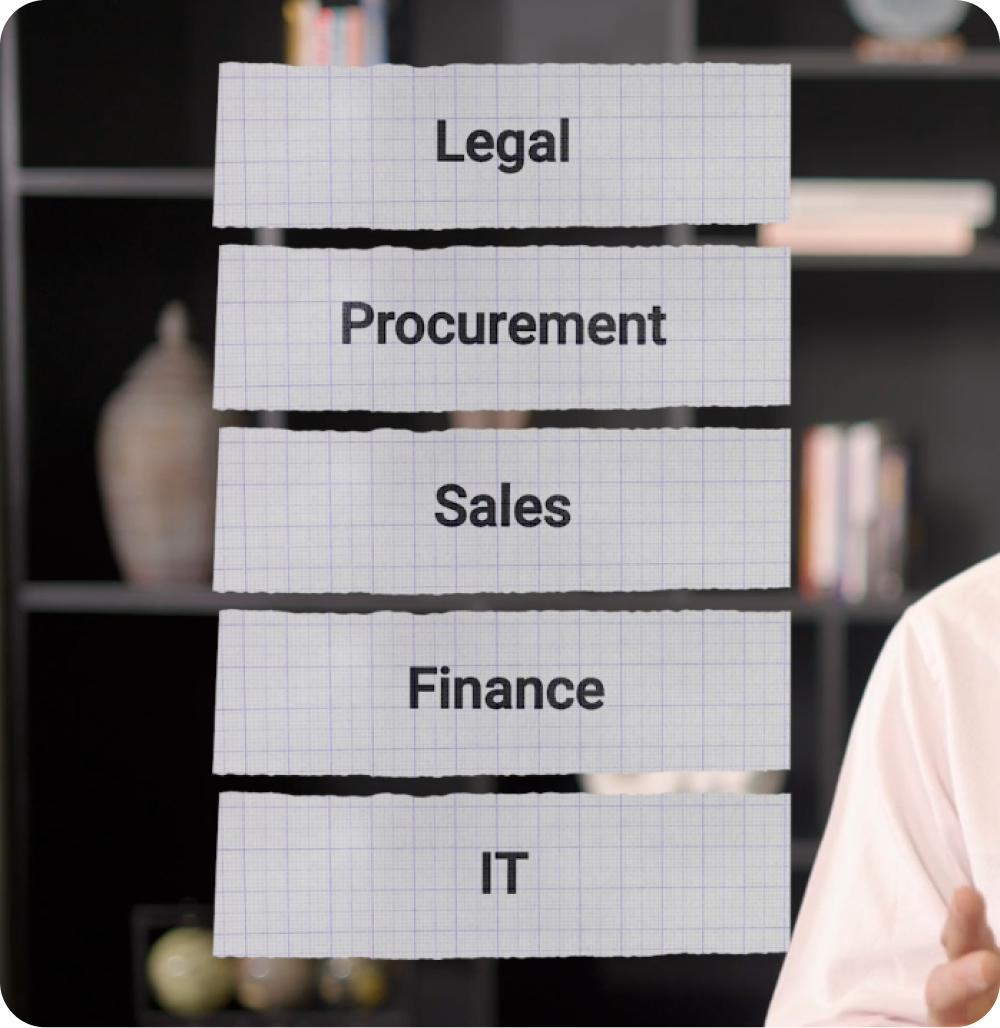
When CLM is deployed across the business, it becomes the operating system
Actionable insights
- Accelerate the Path to „Closed-Won“: By removing manual hurdles and streamlining the transition from quote to signature, sales can forecast with confidence, spot up-sell and cross-sell opportunities and hit targets in the current quarter without last-minute bottlenecks.
- Ensure Control and Precise Forecasting: Finance teams align deals with billing standards from the start and leverage real-time contract data to transform historical reconciliation into precise revenue forecasting.
- Seamless Enterprise Connectivity: A robust CLM doesn’t exist in a vacuum; it integrates deeply with ERP, CRM, and P2P solutions to support end-to-end business processes across buying, selling, and delivery, while ensuring security and governance at scale.
Read full transcript
CLM is often bought by legal but framing it as a legal software doesn’t tell the full story.
For sales, only two things really matter.
Finance isn’t just about reconciling what happened, they’re also using contracts to predict what will happen next.
In other words, for IT, CLM isn’t just another application, it’s mission-critical infrastructure.
Because when CLM is bought to fix one department’s problems, its impact stays limited.
But when it’s deployed across the business, it becomes the operating system of the enterprise.
Hi, I’m Gordon Thompson. Welcome back to another episode of the CLM Navigator Series.
For sales, only 2 things really matter.
One, how fast can they close the deals and 2, how can they expand these accounts? First, sales needs to close faster, turning requests and quotes into signed contracts with as little friction as possible.
If you’re in a sales organization, you know that every 13 weeks we have to deliver results, which means that there’s a lot of pressure to close quickly and in the quarter where you’re forecasting.
Second, sales needs to spot expansion opportunities, understanding relationship value, performance and outcomes to drive upsell and cross-sell conversations.
Because when sales can move quickly and see where value is being delivered, contracts stop being a blocker and start becoming the growth engine that every organization wants.
So for the finance teams, the priority is control and predictability without slowing down how the business buys and sells.
Finance teams need to collaborate early in contracting with both legal, procurement, sales and delivery.
So the right financial controls, terms and guardrails are built into the contracts from the start.
That’s what helps reduce account governance cost, validating invoices, minimizing disputes, and shortening DSO cycles by ensuring contracts are clear, enforceable and aligned to how billing actually works.
Finance also depends on contracts to forecast spend and revenue accurately, using past and present contract data to make cash flow predictable, budgets reliable, and financial planning more precise.
In other words, finance isn’t just about reconciling what happened. They’re also using contracts to predict what will happen next.
Now let’s talk about IT for a minute.
IT isn’t your typical CLM buyer, but they are very important to the CLM buying process. When another department like legal or procurement sales initiates the CLM buying cycle, they act as a technical evaluator.
They want to make sure that the business invest in a system that works for everyone.
That means they’re looking for a system that integrates seamlessly with their existing enterprise architecture, which includes your ERP system, your procure to pay CRM solutions to support end to end processes across buying, selling and delivery.
IT also needs confidence that the platform meets enterprise security, data governance and compliance standards, from access controls to audibility to data residency and regulatory requirements.
Finally, IT is thinking long term.
They need a system that scales with the business and adapts as the ecosystem evolves and doesn’t create future technical debt.
In other words, for IT, CLM isn’t just another application; it’s mission critical infrastructure.
So as we conclude today’s episode, contracts don’t belong to just one team.
They sit at the center of the enterprise.
So contracting software needs to be viewed in the same way. CLM is often bought by legal, but framing it as a legal software doesn’t tell the full story.
As we’ve seen today, every department depends on contracts in different ways.
That’s why buying CLM has to be a cross-functional decision involving legal, procurement, sales, finance, and IT.
Because when CLM is bought to fix one department’s problems, its impact stays limited. But when it’s deployed across the business, it becomes the operating system of the enterprise.
S1 E2-Part 1: Why Do Enterprises Buy CLM?
Welcome back. In the part 1 of episode 2, we explore why legal and procurement teams purchase CLM. From managing risks to improving deal speed and supplier outcomes, their needs reveal why contracts are becoming a strategic system for the enterprise.
Additional Resources
 4 min read
Why Your Deal Cycle Velocity Numbers Are Lying to You

Stop Clicking. Start Asking: The CLM Experience Shift
Frequently Asked Questions
How does CLM help Sales meet quarterly targets?
By automating the quote-to-contract process, CLM removes friction, allowing Sales to close deals within the 13-week forecasting window.
Can Finance use CLM to improve cash flow?
Yes. CLM provides real-time visibility into billing terms and milestones, helping Finance shorten DSO cycles and predict revenue more accurately.
How does CLM integrate with our existing IT stack?
A mission-critical CLM integrates seamlessly with your CRM, ERP, and P2P systems to support end-to-end data flow across the enterprise.
Does CLM support enterprise security and compliance?
Yes. Leading platforms meet rigorous standards for data residency, access controls, and audibility to protect your organization’s most sensitive contract data.
Why is CLM considered an "Enterprise Operating System"?
Because it moves beyond Legal to connect Sales, Finance, and IT, providing a unified source of truth for every business decision. As Gordon explains, “When CLM is bought to fix one department ’s problems, its impact stays limited. But when it is deployed across the business, it becomes the operating system of the enterprise.”