The Ultimate Guide to Contract Management Dashboards

- Last Updated: Sep 01, 2026
- 15 min read
- Arpita Chakravorty
Introduction
Data is one of the most valuable assets a company can leverage, yet managing it effectively remains a challenge. Contracts, often goldmines of critical business data, can quickly become a source of inefficiency without proper tools. With hundreds of data points like clauses, obligations, and deadlines, enterprises risk mismanagement when relying on outdated methods like spreadsheets.
This is where a Contract Management Dashboard steps in—a solution designed to centralize, visualize, and simplify your contract data for actionable insights. In this blog, we’ll explore how these dashboards address the challenges of managing contracts, optimize processes, and empower businesses to make data-driven decisions with ease.
What is a Contract Management Dashboard?
A Contract Management Dashboard is more than just a reporting tool—it’s the control center for your contract lifecycle. It provides a real-time, centralized view of key contract performance indicators (KPIs), workload metrics, and progress through intuitive visualizations like graphs and charts.
By simplifying complex contract data, dashboards allow teams to focus on what matters: performance, compliance, and timely decision-making. Whether you’re managing dozens of contracts or thousands, these dashboards make data accessible and actionable, bridging the gap between strategy and execution.
Common Challenges Businesses Face in Tracking Contract Performance
Contract performance tracking is often riddled with hurdles that hamper efficiency and accuracy. Some common challenges include:
- Decentralized Data: Contract information scattered across multiple tools makes it hard to track and analyze effectively.
- Inconsistent Metrics: A lack of standardized KPIs results in difficulty benchmarking performance.
- Delayed Insights: Manual processes slow reporting, leading to missed opportunities for timely intervention.
- Compliance Risks: Overlooked deadlines and obligations can lead to penalties and reputational damage.
These challenges highlight the pressing need for a centralized system that eliminates inefficiencies and mitigates risks. This is exactly what a contract management dashboard aims to solve.
Addressing Challenges: Key Benefits of Contract Management Dashboards
Dashboards tackle these issues head-on by offering powerful capabilities that streamline contract management:
- 360-Degree Visibility: Consolidates all contract data for real-time insights into performance and risks.
- Streamlined Reporting: Customizable reports make it easy to share actionable insights with stakeholders.
- Improved Decision-Making: Data-driven insights enable teams to renegotiate contracts, refine workflows, and minimize risks.
- Compliance Management: Proactively tracks deadlines and obligations to ensure regulatory compliance.
- Enhanced Collaboration: Enables real-time tracking of metrics, fostering teamwork and faster issue resolution.
By addressing these challenges, dashboards become indispensable tools for managing contracts. But with so many dashboards on the market, what sets Sirion apart?
How Does a Contract Management Dashboard Work?
Contract management dashboards are typically part of a larger Contract Lifecycle Management (CLM) system. These systems collect and store all contract-related data, from the initial negotiation phase to the final execution and post-signing activities. The dashboard presents this data in an accessible format, offering users the ability to interact with and filter the information according to specific criteria.
Here’s how a contract management dashboard typically works:
- Data Collection: Contract data is collected and centralized within the CLM system. This includes everything from key clauses and deadlines to contract management performance metrics.
- Visualization: Data is then displayed in easy-to-read visual formats such as graphs, charts, and tables.
- Customization: Users can filter, pivot, and adjust views to focus on the most relevant information for their needs.
- Reporting: Teams can generate reports and insights based on specific KPIs, which can be shared with internal and external stakeholders.
KPI Metrics to Track Using a Contract Management Dashboard
Tracking the right KPIs on contract management dashboard can provide valuable insights that drive better decisions and ensure smooth operations. Here are some essential performance metrics to monitor:
- Contract Lifecycle Time: Measures the duration from contract initiation to final execution, helping to identify bottlenecks and improve process efficiency.
- Total Contract Value: Tracks the cumulative value and number of active contracts, providing a clear view of contract volume and financial impact across the organization.
- Deadline Compliance: Monitors critical dates, such as renewal, termination, and milestone deadlines, to ensure timely actions and reduce the risk of missed obligations.
- Obligation Fulfillment: Ensures that contractual obligations are met as scheduled, supporting compliance and preventing potential disputes.
- Risk and Compliance Indicators: Flags potential risks or compliance issues, such as missing clauses, delayed payments, or unauthorized amendments, allowing teams to address issues proactively.
Common Pitfalls to Avoid with Contract Management Dashboards
Even the best tools can falter without the right approach. Avoid these common missteps to ensure your dashboard delivers maximum value:
Clutter Overload
Including every possible metric might seem helpful, but it creates noise instead of clarity. Focus on key performance indicators (KPIs) that drive actionable insights.
Data Blind Spots
Outdated or inaccurate data is a recipe for misinformed decisions. Ensure your inputs are updated regularly and validated for accuracy.
One-Size-Fits-All Design
Dashboards should reflect the unique needs of different teams. A sales team, for instance, might prioritize renewal dates, while legal focuses on compliance metrics. Customization is key.
Neglecting User Adoption
A dashboard is only as effective as the people using it. Without proper training or onboarding, teams may bypass it altogether. Prioritize usability and education.
Ignoring Alerts and Automation
Failing to leverage automation for notifications or alerts can result in missed deadlines or overlooked risks. Automate reminders to stay ahead.
By sidestepping these pitfalls, you set the stage for a dashboard that empowers rather than overwhelms.
Key Best Practices for Using a Contract Management Dashboard
To transform your contract management dashboard into a strategic powerhouse, adopt these best practices:
Focus on What Matters Most
Regularly refine your KPIs to align with business objectives. Less is more—focus on contract management metrics that truly impact outcomes, like compliance rates or lifecycle bottlenecks.
Empower Collaboration
Use your dashboard as a shared resource. Whether it’s during strategy meetings or performance reviews, having everyone on the same page fosters accountability and teamwork.
Leverage Automation and Alerts
Configure your dashboard to send timely notifications for upcoming deadlines, risks, or anomalies. Automation ensures you stay proactive rather than reactive.
Tailor for Different Teams
Build role-specific views that cater to the unique needs of legal, procurement, and sales teams. A personalized experience encourages adoption and relevance.
Make It a Living Tool
Dashboards shouldn’t be static. Periodically review and update the design, metrics, and configurations to meet evolving business needs and user feedback.
By incorporating these practices, your dashboard can evolve from a simple reporting tool into a dynamic driver of contract management excellence.
Why Choose Sirion’s Contract Management Dashboard?
Sirion’s Contract Management Dashboard redefines ease of use and accessibility. It’s designed to make contract insights readily available for everyone, regardless of technical expertise, and works seamlessly with minimal configuration. Here’s what sets it apart:
- Effortless Insights: Sirion’s AI-powered engine extracts data from contracts, offering clear, actionable insights without manual effort.
- Customizable and Intuitive: Dashboards are easily tailored to specific roles and needs, ensuring relevance for every user.
- Automated Alerts: Proactive notifications ensure deadlines, risks, and obligations are never missed.
- Real-Time Data Tracking: Dynamic updates provide continuous performance monitoring.
- User-Friendly Interface: Designed for anyone to navigate and extract value without requiring extensive training.
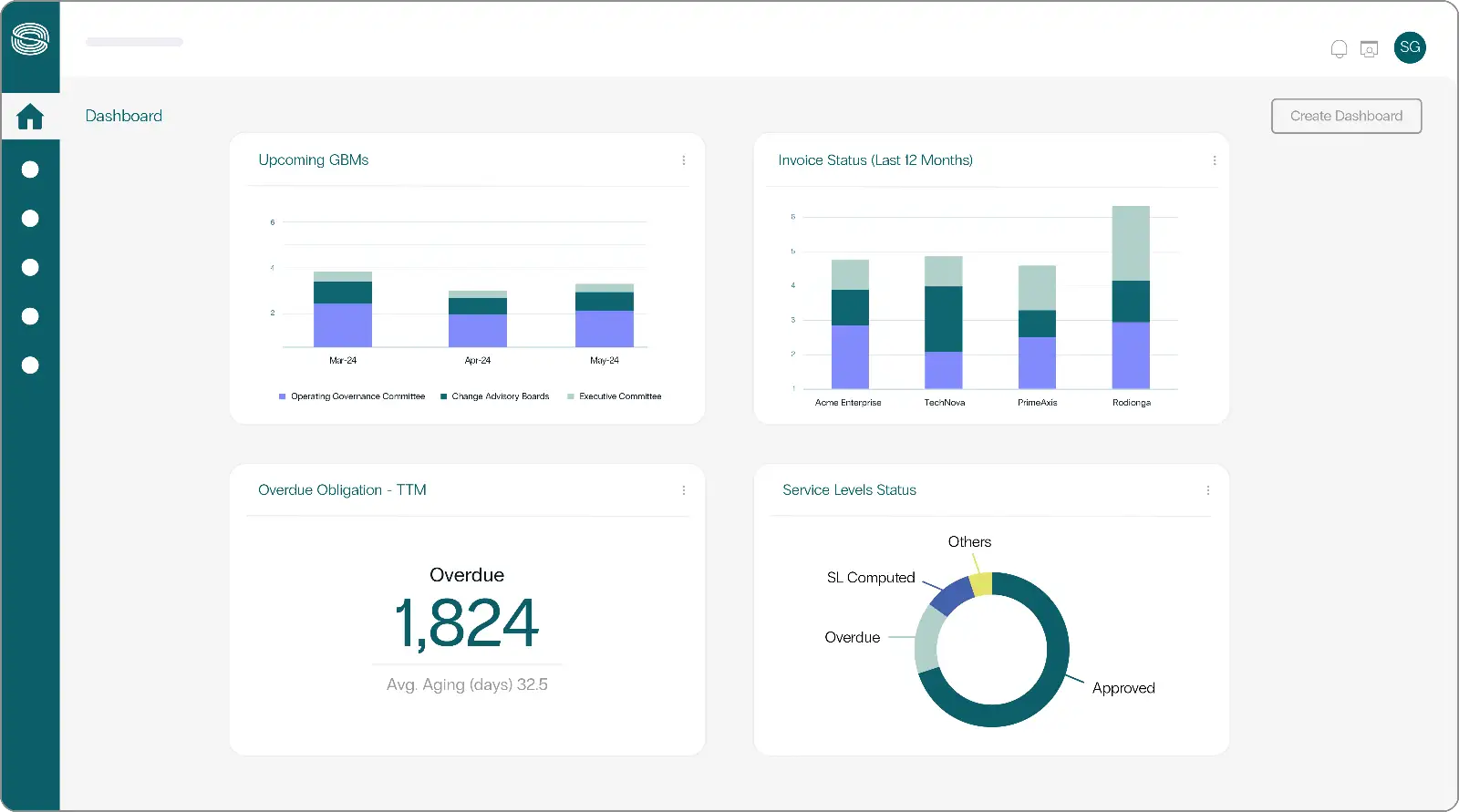
Sirion’s dashboard enables businesses to move beyond basic contract tracking to strategic contract intelligence.
The Essential Role of Dashboards in Contract Management
A well-designed contract management dashboard isn’t just a tool—it’s a strategic advantage. By centralizing data, enhancing compliance, and delivering actionable insights, dashboards empower teams to make smarter, faster decisions. For organizations looking to optimize their contract lifecycle processes, a robust dashboard is the cornerstone of efficiency, collaboration, and success.

Arpita has spent close to a decade creating content in the B2B tech space, with the past few years focused on contract lifecycle management. She’s interested in simplifying complex tech and business topics through clear, thoughtful writing.
- Contract management dashboards turn complex contract data into actionable business visibility.
Centralized views of obligations, deadlines, risk, performance, and financial exposure help teams identify what requires attention. - The right dashboard depends on who is using it and what decisions they need to make.
Legal, Procurement, Finance, operational teams, and executives require different KPIs and levels of portfolio detail. - Effective dashboards connect contract activity with financial and operational outcomes.
Tracking value, SLA performance, obligation fulfillment, renewals, and risk helps organizations move beyond process reporting to business performance. - Role-specific KPIs make performance gaps easier to identify and address.
Department-level views can expose approval bottlenecks, missed commitments, and other issues hidden by enterprise-wide averages. - AI-powered CLM makes contract dashboards more dynamic and reliable.
Automated data extraction, real-time monitoring, alerts, and portfolio intelligence help turn dashboards from static reporting tools into systems for continuous contract management.
Data is one of the most valuable assets a company can leverage, yet managing it effectively remains a challenge. Contracts, often goldmines of critical business data, can quickly become a source of inefficiency without proper tools. With hundreds of data points like clauses, obligations, and deadlines, enterprises risk mismanagement when relying on outdated methods like spreadsheets.
This is where a Contract Management Dashboard steps in—a solution designed to centralize, visualize, and simplify your contract data for actionable insights. In this blog, we’ll explore how these dashboards address the challenges of managing contracts, optimize processes, and empower businesses to make data-driven decisions with ease.
What is a Contract Management Dashboard?
A Contract Management Dashboard is more than just a reporting tool—it’s the control center for your contract lifecycle. It provides a real-time, centralized view of key contract performance indicators (KPIs), workload metrics, and progress through intuitive visualizations like graphs and charts.
By simplifying complex contract data, dashboards allow teams to focus on what matters: performance, compliance, and timely decision-making. Whether you’re managing dozens of contracts or thousands, these dashboards make data accessible and actionable, bridging the gap between strategy and execution.
Common Challenges Businesses Face in Tracking Contract Performance
Contract performance tracking is often riddled with hurdles that hamper efficiency and accuracy. Some common challenges include:
- Decentralized Data: Contract information scattered across multiple tools makes it hard to track and analyze effectively.
- Inconsistent Metrics: A lack of standardized KPIs results in difficulty benchmarking performance.
- Delayed Insights: Manual processes slow reporting, leading to missed opportunities for timely intervention.
- Compliance Risks: Overlooked deadlines and obligations can lead to penalties and reputational damage.
These challenges highlight the pressing need for a centralized system that eliminates inefficiencies and mitigates risks. This is exactly what a contract management dashboard aims to solve.
Addressing Challenges: Key Benefits of Contract Management Dashboards
Dashboards tackle these issues head-on by offering powerful capabilities that streamline contract management:
- 360-Degree Visibility: Consolidates all contract data for real-time insights into performance and risks.
- Streamlined Reporting: Customizable reports make it easy to share actionable insights with stakeholders.
- Improved Decision-Making: Data-driven insights enable teams to renegotiate contracts, refine workflows, and minimize risks.
- Compliance Management: Proactively tracks deadlines and obligations to ensure regulatory compliance.
- Enhanced Collaboration: Enables real-time tracking of metrics, fostering teamwork and faster issue resolution.
By addressing these challenges, dashboards become indispensable tools for managing contracts. But with so many dashboards on the market, what sets Sirion apart?
How Does a Contract Management Dashboard Work?
Contract management dashboards are typically part of a larger Contract Lifecycle Management (CLM) system. These systems collect and store all contract-related data, from the initial negotiation phase to the final execution and post-signing activities. The dashboard presents this data in an accessible format, offering users the ability to interact with and filter the information according to specific criteria.
Here’s how a contract management dashboard typically works:
- Data Collection: Contract data is collected and centralized within the CLM system. This includes everything from key clauses and deadlines to contract management performance metrics.
- Visualization: Data is then displayed in easy-to-read visual formats such as graphs, charts, and tables.
- Customization: Users can filter, pivot, and adjust views to focus on the most relevant information for their needs.
- Reporting: Teams can generate reports and insights based on specific KPIs, which can be shared with internal and external stakeholders.
KP Metrics to Track Using a Contract Management Dashboard
Tracking the right KPIs on contract management dashboard can provide valuable insights that drive better decisions and ensure smooth operations. Here are some essential performance metrics to monitor:
- Contract Lifecycle Time: Measures the duration from contract initiation to final execution, helping to identify bottlenecks and improve process efficiency.
- Total Contract Value: Tracks the cumulative value and number of active contracts, providing a clear view of contract volume and financial impact across the organization.
- Deadline Compliance: Monitors critical dates, such as renewal, termination, and milestone deadlines, to ensure timely actions and reduce the risk of missed obligations.
- Obligation Fulfillment: Ensures that contractual obligations are met as scheduled, supporting compliance and preventing potential disputes.
- Risk and Compliance Indicators: Flags potential risks or compliance issues, such as missing clauses, delayed payments, or unauthorized amendments, allowing teams to address issues proactively.
Financial & Operational Metrics Dashboard
Connect contract activity to business performance. Explore how dashboards bring financial and operational metrics together to track contract value, efficiency, risk, compliance, and performance in one view.
Explore Financial & Operational Metrics Dashboards
Common Pitfalls to Avoid with Contract Management Dashboards
Even the best tools can falter without the right approach. Avoid these common missteps to ensure your dashboard delivers maximum value:
- Clutter Overload
Including every possible metric might seem helpful, but it creates noise instead of clarity. Focus on key performance indicators (KPIs) that drive actionable insights. - Data Blind Spots
Outdated or inaccurate data is a recipe for misinformed decisions. Ensure your inputs are updated regularly and validated for accuracy. - One-Size-Fits-All Design
Dashboards should reflect the unique needs of different teams. A sales team, for instance, might prioritize renewal dates, while legal focuses on compliance metrics. Customization is key. - Neglecting User Adoption
A dashboard is only as effective as the people using it. Without proper training or onboarding, teams may bypass it altogether. Prioritize usability and education. - Ignoring Alerts and Automation
Failing to leverage automation for notifications or alerts can result in missed deadlines or overlooked risks. Automate reminders to stay ahead.
By sidestepping these pitfalls, you set the stage for a dashboard that empowers rather than overwhelms.
KPI Dashboards for Department Performance
Portfolio-wide averages can hide where performance problems actually originate. Learn how KPI dashboards help identify departments with slower approvals, missed commitments, or other contracting bottlenecks that require attention.
Key Best Practices for Using a Contract Management Dashboard
To transform your contract management dashboard into a strategic powerhouse, adopt these best practices:
- Focus on What Matters Most
Regularly refine your KPIs to align with business objectives. Less is more—focus on contract management metrics that truly impact outcomes, like compliance rates or lifecycle bottlenecks. - Empower Collaboration
Use your dashboard as a shared resource. Whether it’s during strategy meetings or performance reviews, having everyone on the same page fosters accountability and teamwork. - Leverage Automation and Alerts
Configure your dashboard to send timely notifications for upcoming deadlines, risks, or anomalies. Automation ensures you stay proactive rather than reactive. - Tailor for Different Teams
Build role-specific views that cater to the unique needs of legal, procurement, and sales teams. A personalized experience encourages adoption and relevance. - Make It a Living Tool
Dashboards shouldn’t be static. Periodically review and update the design, metrics, and configurations to meet evolving business needs and user feedback.
By incorporating these practices, your dashboard can evolve from a simple reporting tool into a dynamic driver of contract management excellence.
Board-Level Contract Portfolio Dashboard
Executive dashboards need to translate contract activity into business-level intelligence. See how board-level portfolio dashboards surface material risks, financial exposure, performance trends, and strategic contract issues without overwhelming leaders with operational detail.
Why Choose Sirion’s Contract Management Dashboard?
Sirion’s Contract Management Dashboard redefines ease of use and accessibility. It’s designed to make contract insights readily available for everyone, regardless of technical expertise, and works seamlessly with minimal configuration. Here’s what sets it apart:
- Effortless Insights: Sirion’s AI-powered engine extracts data from contracts, offering clear, actionable insights without manual effort.
- Customizable and Intuitive: Dashboards are easily tailored to specific roles and needs, ensuring relevance for every user.
- Automated Alerts: Proactive notifications ensure deadlines, risks, and obligations are never missed.
- Real-Time Data Tracking: Dynamic updates provide continuous performance monitoring.
- User-Friendly Interface: Designed for anyone to navigate and extract value without requiring extensive training.
Sirion’s dashboard enables businesses to move beyond basic contract tracking to strategic contract intelligence.
The Essential Role of Dashboards in Contract Management
A well-designed contract management dashboard isn’t just a tool—it’s a strategic advantage. By centralizing data, enhancing compliance, and delivering actionable insights, dashboards empower teams to make smarter, faster decisions. For organizations looking to optimize their contract lifecycle processes, a robust dashboard is the cornerstone of efficiency, collaboration, and success.
Explore More Contract Management Dashboard Resources
Find out how contract dashboards help organizations identify commitment issues and communicate portfolio risk to leadership.
Frequently Asked Questions About Contract Management Dashboards
How many KPIs should a contract management dashboard track?
There is no ideal fixed number. A useful dashboard should show only the metrics that require decisions or action from its intended audience. Operational teams may need granular measures such as approval delays and overdue obligations, while executives may need only a small set of indicators covering financial exposure, portfolio risk, performance, and renewals. Adding more metrics does not necessarily create better visibility.
Should Legal, Procurement, Finance, and executives use the same contract dashboard?
They can draw from the same underlying contract data, but they should not necessarily see the same dashboard. Legal may prioritize clause deviations and compliance risk; Procurement may focus on supplier performance and commercial commitments; Finance may track pricing and value leakage; and executives need portfolio-level exposure and trends. Role-specific dashboards make the same contract intelligence relevant to different decisions.
How do you know if a contract dashboard is actually useful?
A useful dashboard should lead to action. Teams should be able to identify which contracts, counterparties, obligations, or processes require attention without conducting additional manual analysis. If users regularly export dashboard data into spreadsheets before they can make decisions, the dashboard is probably functioning as a reporting layer rather than a management tool.
What makes contract dashboard data unreliable?
Dashboard accuracy depends on the underlying contract data. Missing amendments, inconsistent metadata, outdated obligation statuses, disconnected enterprise systems, and incorrectly extracted terms can all produce misleading KPIs. Organizations therefore need data validation and governance alongside visualization—especially when dashboards are used for financial, compliance, or executive decisions.
Can a contract management dashboard show where value is being lost?
Yes, provided contractual data is connected with operational and financial performance. For example, organizations can compare agreed pricing with invoices, promised SLAs with actual performance, contractual rebates with amounts received, or renewal terms with realized outcomes. This moves the dashboard beyond activity reporting toward identifying potential contract value leakage.
What should a board-level contract dashboard show?
Board-level reporting should focus on material exposure rather than day-to-day contracting activity. Depending on the business, this could include contract value at risk, major compliance exposures, concentration risk, critical supplier performance, significant upcoming renewals, unresolved contractual disputes, and trends that could materially affect revenue, cost, or operations.
Arpita has spent close to a decade creating content in the B2B tech space, with the past few years focused on contract lifecycle management. She’s interested in simplifying complex tech and business topics through clear, thoughtful writing.
Zusätzliche Ressourcen

What is Contract Analytics? Unlocking Performance and Compliance with Gen AI

Contract Management Reporting: A Mission-Critical Capability