
If you use a software subscription like Salesforce, hire a freelance graphic designer, or partner with a payroll service, you’re already in the world of third-party contracts. Far from being a niche legal document, these agreements are the bedrock of modern business operations. They are the invisible threads that connect you to the vendors, suppliers, and partners who make your work possible.
But here’s the thing: while these contracts are everywhere, understanding how to manage them can feel overwhelming, especially if you don’t have a legal team on standby. Many business leaders either sign on the dotted line without a second thought or get stuck in analysis paralysis, worried about hidden risks. This guide will change that. We’ll break down third-party contracts into simple, actionable concepts, helping you move from uncertainty to confidence.
What is a Third-Party Contract? Definition, Examples, and Key Roles
At its heart, a third-party contract is an agreement between two parties that creates obligations or rights for a third party who is not directly involved in signing the document. It sounds a bit abstract, so let’s make it tangible.
Imagine your company (Party A) signs a contract with a catering company (Party B) to provide lunch for an important client meeting. Your client (Party C) is the „third-party beneficiary.“ They didn’t sign the contract, but they have a right to expect a service (lunch) because of it.
To keep it clear, let’s look at the three key roles you’ll encounter.
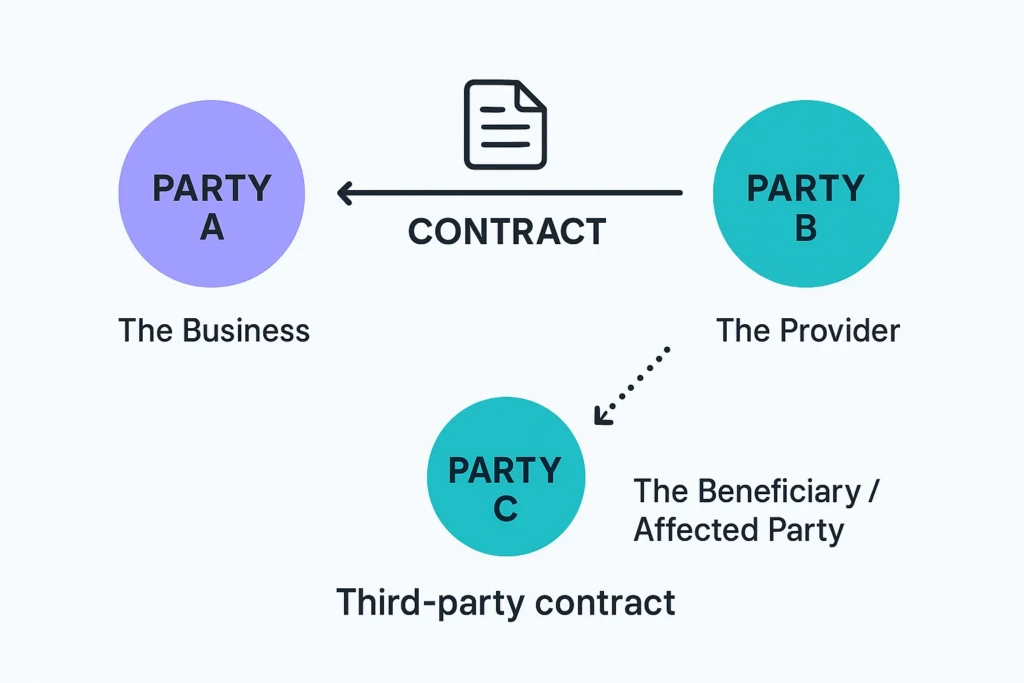
Understanding these roles helps you see beyond the simple two-way agreement and recognize the broader impact your contracts have on your business ecosystem.
Types of Third-Party Contracts and When to Use Them
Definitely not. The type of relationship you’re entering into dictates the structure and focus of the contract. While there are countless variations, most business agreements fall into a few common categories. Knowing which one you’re dealing with helps you focus on the clauses that matter most.
Before diving into specifics, it’s helpful to have a general understanding of the types of business contracts you might encounter. Here are three of the most frequent third-party scenarios:
- Vendor and Supplier Agreements: This is when you buy goods or services, from office supplies to enterprise software. The key here is clarity on deliverables and performance. Your focus should be on Service Level Agreements (SLAs) that define uptime or service quality, clear payment terms, and performance metrics. This is a core part of effective vendor management.
- Subcontractor and Freelancer Agreements: You hire an external expert—like a developer or a marketing consultant—to complete a specific task or project. For these, intellectual property (IP) rights are critical. The contract must clearly state who owns the final work product. It should also have a detailed scope of work to prevent „scope creep“ and ensure you get exactly what you paid for.
- Partnership and Reseller Agreements: This is when you collaborate with another business to sell products or reach new markets. These contracts are all about mutual responsibilities. You need to clearly outline each party’s role, the commission or revenue-sharing structure, and how you will represent each other’s brands.
A Common Pitfall to Avoid
One of the biggest mistakes businesses make is treating all contracts as a simple formality. Accepting a vendor’s standard terms without review can expose you to significant risk. For example, a standard software agreement might have an auto-renewal clause with a steep price increase or a limitation of liability that leaves you unprotected in case of a data breach. Always read the fine print.
Knowing the different types of third-party agreements is only half the battle. The real challenge lies in keeping them from falling apart in the first place.


Why Third-Party Contracts Fail (and How to Avoid It)
Even well-drafted contracts can unravel if they aren’t managed proactively. Here are some of the most common reasons third-party agreements fail—and how to prevent them:
- Ambiguous terms – Vague language leaves room for misinterpretation. Avoid this by defining every obligation, deliverable, and timeline in precise terms.
- Lack of monitoring – Signing and storing a contract without follow-up means missed deadlines and obligations. A structured review process keeps performance on track.
- Misaligned expectations – Failing to align on scope, pricing, and quality standards at the start can lead to disputes. Ensure both sides have a shared understanding of key terms before signing.
- Overlooked renewals or escalation clauses – Auto-renewals with price increases can erode margins. Set alerts for critical dates and review terms well before renewal.
By building in clarity, regular check-ins, and strong governance, you can stop most contract failures before they start.
Third-Party Contract Risks and How to Mitigate Them
Every third-party contract carries inherent risks. The goal isn’t to eliminate them entirely—it’s to manage them intelligently.
- Financial risks – Late delivery, overcharging, or poor quality can directly impact revenue. Use SLAs tied to penalties or performance-based incentives.
- Compliance risks – Contracts that fail to address data privacy (e.g., GDPR) or industry regulations can result in fines. Include compliance clauses aligned with your sector’s standards.
- Operational risks – Dependency on a single vendor can disrupt operations if they fail. Build redundancy into critical supply lines.
- Cybersecurity risks – For software or cloud vendors, include strict data security and breach notification obligations.
With a robust CLM platform, you can centralize risk data, track compliance, and automate alerts to address issues before they escalate.
How to Manage Third-Party Contracts Effectively
Signing the contract is just the beginning. The real value—or risk—emerges over the lifetime of the agreement. Managing this effectively isn’t a dark art; it’s a process. By breaking it down into manageable stages, you can ensure your agreements deliver on their promises and don’t create unexpected problems.
The entire journey can be visualized as a cycle. A robust contract lifecycle management process is key to unlocking the full value of your commercial relationships. Here are the six essential steps:
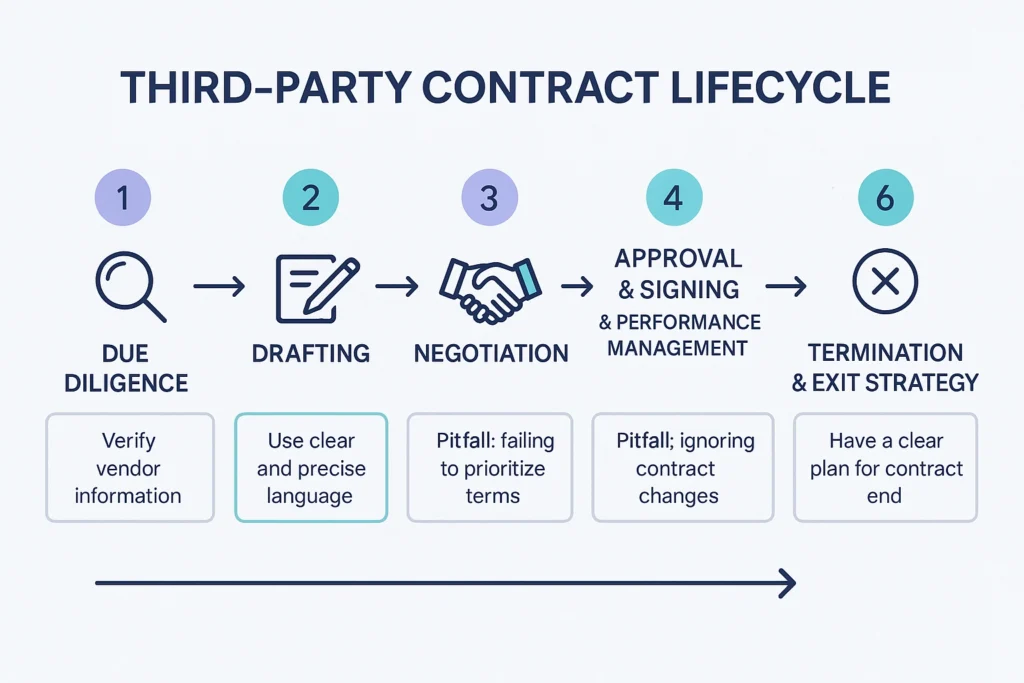
Top 6 Best Practices to Manage Third-Party Contracts
Let’s walk through what each of these stages means in practice.
- Due Diligence: Before you even think about a contract, you need to vet your potential partner. Are they financially stable? Do they have a good reputation? Can they actually deliver what they promise? This is the foundational step of contract risk management, and skipping it is like building a house on sand.
- Drafting: This is where the agreement is created. You might start from a contract template or have one drafted from scratch. The goal is to clearly document the responsibilities, timelines, payment schedules, and other key terms discussed. Ensure the language is precise to avoid ambiguity down the road.
- Negotiation: It’s rare for a first draft to be perfect for both sides. The contract negotiation phase is where you and the other party discuss terms and make adjustments. Key areas of focus often include price, liability caps, data security requirements, and termination rights.
- Approval & Signing: Once both parties are satisfied, the contract goes through internal approval channels before it’s signed. In the digital age, this is often handled with e-signature software, creating a legally binding agreement efficiently and securely.
- Ongoing Monitoring: This is where most businesses drop the ball. A signed contract isn’t meant to be filed away and forgotten. You need to actively monitor performance. Is the vendor meeting their SLAs? Are deadlines being hit? Modern contract lifecycle management platforms can automate this by tracking obligations and alerting you to potential issues.
- Termination & Exit: All contracts eventually end. Whether it’s through successful completion, mutual agreement, or a breach of terms, having a clear exit strategy is crucial. The termination of contract clause should outline exactly how the relationship can be ended, including notice periods and responsibilities for data return or transition support.
Understanding these best practices is essential—but it’s equally important to recognize how your role in the agreement changes your priorities.
Buy-Side vs. Sell-Side Third-Party Contracts: Key Differences
Third-party contracts look very different depending on whether you’re buying a service or delivering one.
- Buy-Side Contracts – As the customer, your focus is on service quality, delivery timelines, and cost control. Vendor agreements, SaaS subscriptions, and procurement contracts typically fall here.
- Sell-Side Contracts – As the provider, your priorities shift to ensuring clear scope, payment security, and limiting liability. Reseller, licensing, or outsourcing agreements fit this category.
Recognizing whether you’re in a buy-side or sell-side position helps you tailor your negotiation strategy and risk protections accordingly.
Essential Clauses for Strong and Enforceable Third-Party Contracts
Now that you understand the lifecycle, how do you ensure your contracts are strong from the start? It comes down to including the right terms. While every contract is unique, certain clauses are fundamental to protecting your business.
We can think of these clauses in tiers, from the absolute essentials to advanced terms for more complex partnerships. Familiarizing yourself with these important contract clauses will give you a massive advantage in any negotiation.
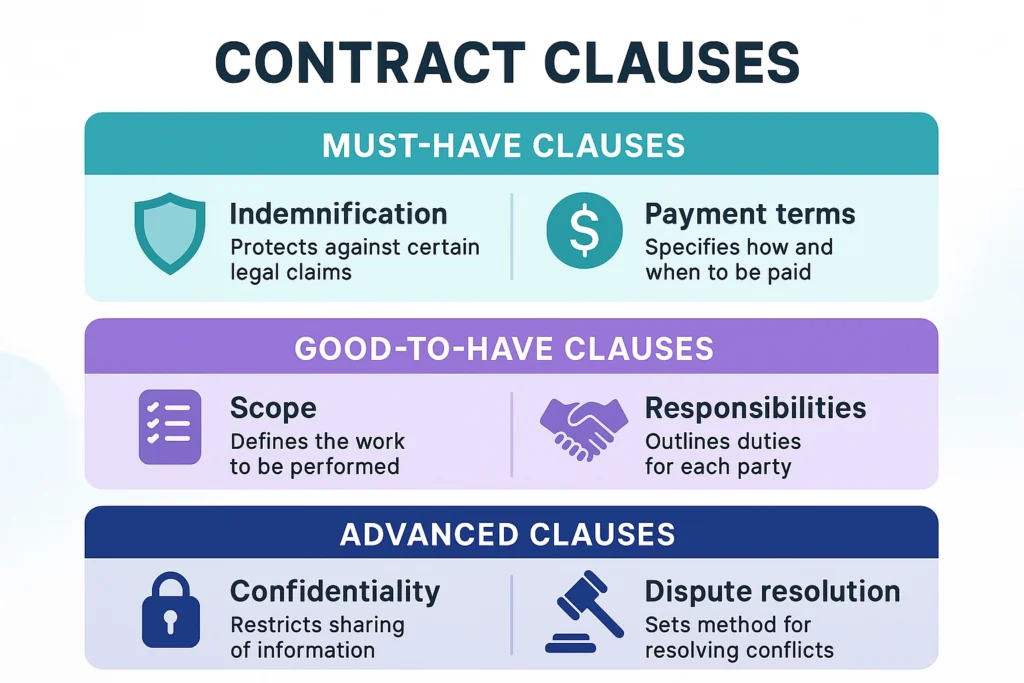
Thinking about clauses in this tiered way helps you prioritize. For a small, low-risk project, the „Must-Haves“ might be enough. For a critical, long-term partnership with a software provider, you’ll want to ensure all three tiers are covered.
Once you have strong terms in place, technology can help ensure those commitments deliver real business value.
How Technology Elevates Third-Party Contract Management
Manual contract management leaves too much room for error—missed renewals, forgotten obligations, and buried risk clauses. Modern CLM platforms like Sirion automate the heavy lifting:
- Centralized repository – Store all contracts in one searchable location.
- Automated alerts – Never miss a key milestone, renewal date, or SLA review.
- AI-powered risk detection – Identify risky clauses or non-standard terms before signing.
- Real-time performance tracking – Monitor vendor compliance and trigger workflows for any deviations.
This shift from reactive oversight to proactive governance turns contracts into strategic assets.
Strong governance isn’t just about having the right clauses—it’s about knowing whether your contracts are actually performing.
Key Metrics to Track Third-Party Contract Performance
Tracking key performance indicators (KPIs) helps you measure the real-world impact of your agreements:
- SLA compliance rate – Percentage of obligations met on time and to standard.
- On-time delivery – How often deliverables meet agreed timelines.
- Contract value realization – Actual value captured versus projected value at signing.
- Dispute frequency – Number of escalations or breaches per year.
- Renewal rates – Percentage of contracts renewed with favorable terms.
With these metrics, you can identify underperforming vendors early and strengthen high-value partnerships.
Wrapping Up: How to Get the Most from Third-Party Contracts
Third-party contracts are not just legal documents; they are strategic tools that enable growth, innovation, and efficiency. By moving past the jargon and viewing them through a practical business lens, you can turn a source of anxiety into a competitive advantage.

It starts with understanding the basic roles and then recognizing the different types of agreements you’ll encounter. From there, adopting a structured, six-step lifecycle approach—from due diligence to termination—provides a clear roadmap for success. By focusing on the right clauses and actively monitoring performance, you ensure these agreements don’t just sit in a drawer but actively work to protect and advance your business goals.