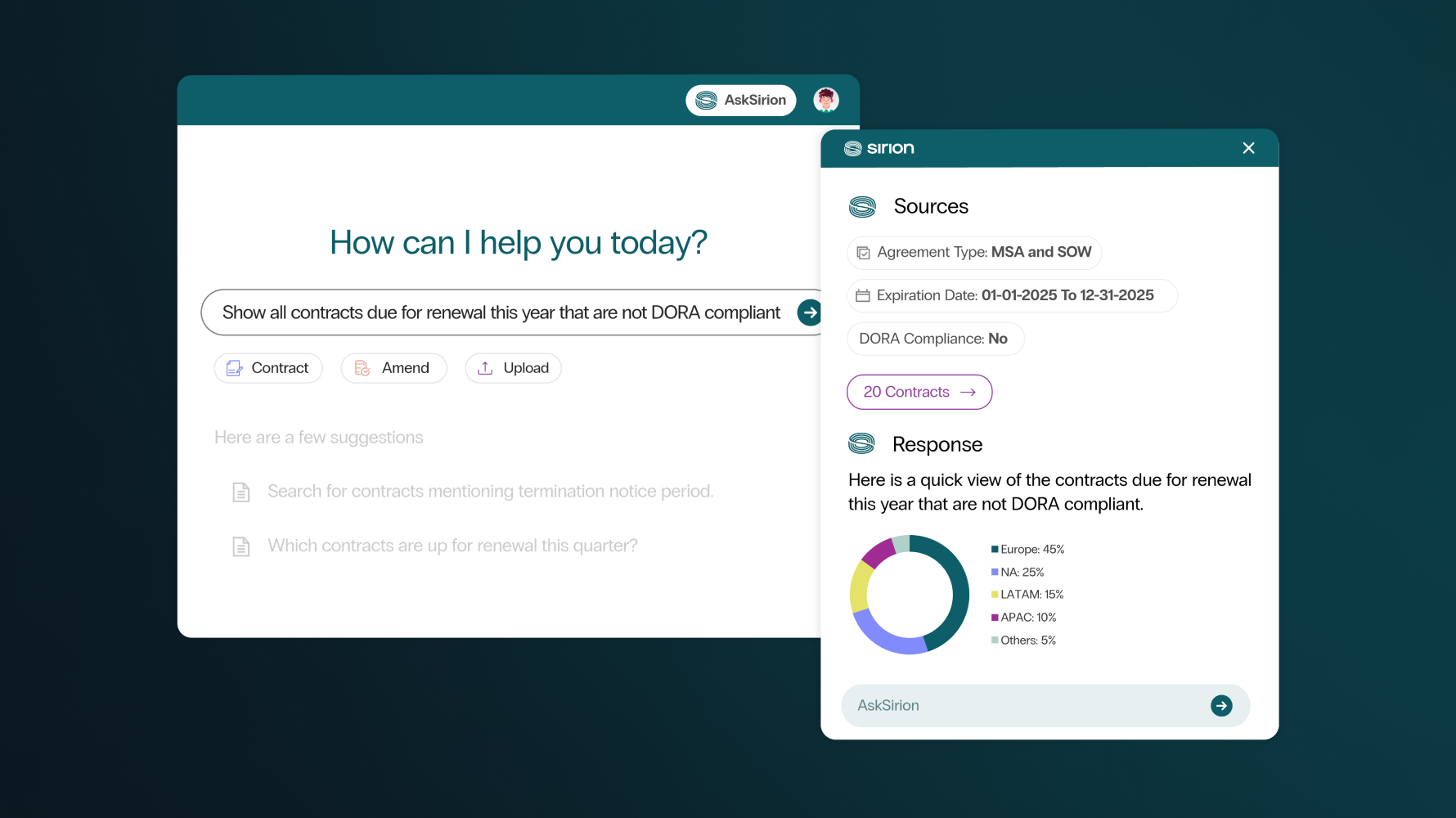
Choosing a contract lifecycle management (CLM) tool is a strategic technology decision that affects legal, procurement, sales, finance, and IT teams across the enterprise. As organizations evaluate vendors, they typically encounter two common options: scheduling a product demonstration or signing up for a free trial. While both approaches help buyers explore a platform, they serve different purposes and provide different levels of insight.
For enterprise organizations, the decision isn’t simply whether to watch a demo or test software independently. It is about determining which evaluation method best validates complex workflows, AI capabilities, integrations, governance requirements, and long-term business outcomes. Understanding the differences between a CLM demo and a free trial helps organizations make more informed purchasing decisions and avoid lengthy evaluation cycles.
What Is a CLM Demo?
A CLM demo is a guided product demonstration tailored to an organization’s contracting processes and business objectives. Rather than exploring software independently, buyers work with product specialists who demonstrate how the platform supports contract authoring, negotiation, approvals, AI-assisted review, obligation management, analytics, and enterprise integrations.
Because demonstrations are customized around specific business challenges, they allow organizations to evaluate how a CLM platform fits their existing legal and procurement processes before committing to implementation.
Typical enterprise CLM demos include:
- Discovery of current contracting challenges
- AI-powered contract drafting and review
- Workflow automation
- Contract repository and search
- Post-signature management
- Analytics and reporting
- Integration capabilities
- Implementation approach
What Is a CLM Free Trial?
A free trial gives prospective customers temporary access to a CLM platform so they can explore features independently. Users can navigate the interface, create sample contracts, configure workflows, and evaluate selected capabilities using trial environments.
Free trials work well for products with standardized functionality and short implementation cycles. However, enterprise CLM platforms typically involve sophisticated workflows, integrations, governance models, and AI capabilities that may not be fully represented in a limited trial environment.
As a result, a free trial often provides insight into usability but may not demonstrate how the platform performs within complex enterprise contracting environments.
CLM Demo vs. Free Trial: Key Differences
Evaluation Area | CLM Demo | Free Trial |
Guidance | Personalized product walkthrough | Self-guided evaluation |
Business Context | Tailored to enterprise workflows | Generic sample environment |
AI Demonstration | Shows AI within real contracting scenarios | Limited AI access depending on trial |
Integrations | Discussed and demonstrated where applicable | Often unavailable or simulated |
Workflow Evaluation | Covers end-to-end contract lifecycle | Usually limited to selected features |
Best For | Enterprise evaluations | Initial product exploration |
When Is a CLM Demo the Better Choice?
A guided demonstration is often the best option when organizations need to evaluate complex contracting requirements rather than individual product features.
A CLM demo is particularly valuable when you need to:
- Evaluate AI-assisted contract review and drafting.
- Understand end-to-end contract lifecycle workflows.
- Validate enterprise integrations with ERP, CRM, procurement, and e-signature platforms.
- Assess governance, permissions, and compliance controls.
- Demonstrate business-specific contracting scenarios.
- Align multiple stakeholders around a common evaluation process.
For large enterprises, these discussions often provide more meaningful insights than independent product exploration.
When Does a Free Trial Make Sense?
Free trials remain valuable in certain situations, particularly when organizations want to familiarize themselves with a platform before engaging in a deeper evaluation.
A free trial is well suited for:
- Small legal teams with straightforward contracting needs.
- Early-stage product research.
- Evaluating user interface and navigation.
- Testing basic document creation workflows.
- Comparing ease of use across multiple vendors.
While useful for initial exploration, free trials rarely capture the complexity of enterprise contracting processes or organization-specific workflows.
Enterprise Decision Matrix: Should You Choose a CLM Demo or a Free Trial?
The right evaluation approach depends on your organization’s contracting complexity, buying stage, and business objectives. While free trials can help buyers explore a platform independently, enterprise organizations often require guided demonstrations to evaluate complex workflows, AI capabilities, integrations, and governance requirements.
The following matrix can help determine which approach is best suited to your evaluation.
Your Situation | Recommended Approach | Why |
You’re researching CLM platforms for the first time. | Free Trial | Explore the user interface, core functionality, and overall product experience before creating a shortlist. |
You want to compare usability across multiple vendors. | Free Trial | Evaluate navigation, ease of use, and basic workflows without committing to a guided evaluation. |
Your organization manages complex, high-volume contracts. | CLM Demo | Validate enterprise workflows, AI capabilities, governance, and scalability using business-specific scenarios. |
Multiple stakeholders are involved in vendor selection. | CLM Demo | Demonstrations help legal, procurement, finance, IT, and business teams evaluate the platform together and align on requirements. |
You need to assess integrations with ERP, CRM, procurement, or e-signature platforms. | CLM Demo | Vendors can explain integration architecture, implementation approach, and enterprise deployment considerations that are typically unavailable in trial environments. |
AI-powered drafting, review, and contract intelligence are key evaluation criteria. | CLM Demo | Guided demonstrations showcase how AI supports real contracting workflows and enterprise governance. |
You’ve shortlisted one or two vendors and want to validate your decision. | Demo + Proof of Concept | Combine a tailored demonstration with a proof of concept or guided trial to evaluate the platform using your own contracts, workflows, and business processes. |
There is no single evaluation approach that fits every organization. Smaller teams with straightforward contracting needs may gain sufficient insight from a free trial, while large enterprises typically require tailored demonstrations to assess broader business requirements. In many enterprise buying journeys, the strongest approach combines both—using a demo to understand strategic fit and a proof of concept or guided trial to validate real-world performance before implementation.
What Enterprise Buyers Should Evaluate Regardless of Approach
Whether choosing a demo or a free trial, organizations should evaluate the platform using consistent business criteria.
Key evaluation areas include:
Capability | Why It Matters |
AI capabilities | Accelerates drafting, review, search, and contract intelligence |
Workflow automation | Improves consistency and reduces manual effort |
Integrations | Connects CLM with ERP, CRM, procurement, and e-signature systems |
Governance | Supports security, compliance, and audit readiness |
Analytics | Provides visibility into contract performance and risk |
Scalability | Supports future business growth and global operations |
Looking beyond individual features helps organizations select a platform that delivers long-term strategic value.

Can Enterprises Benefit from Both?
For many enterprise evaluations, the most effective approach combines both options. A guided demonstration introduces the platform within the context of real business challenges, while a subsequent proof of concept or limited trial allows stakeholders to validate workflows using their own contracts and processes.
This staged evaluation reduces implementation risk and provides greater confidence before making a long-term technology investment.
Why Enterprise CLM Evaluations Are Different
Unlike many business applications, CLM platforms rarely operate in isolation. They support cross-functional processes involving legal, procurement, sales, finance, IT, and compliance teams while integrating with multiple enterprise systems.
As a result, successful evaluations extend beyond software usability. Organizations should assess implementation readiness, AI maturity, governance, scalability, customer success resources, and long-term business outcomes—not just interface design or individual features.
Modern AI-native CLM platforms such as Sirion help enterprises evaluate these capabilities through tailored demonstrations that showcase intelligent contract authoring, AI-powered review, contract intelligence, workflow automation, and post-signature management within a unified platform.
Conclusion
Both CLM demos and free trials play an important role in the software evaluation process, but they address different buyer needs. Free trials help organizations explore usability and basic functionality, while guided demonstrations provide deeper insight into enterprise workflows, AI capabilities, governance, and long-term business value. For organizations managing complex contract operations, a tailored CLM demo often provides the context needed to make a confident technology decision and identify the platform best suited to support enterprise contracting at scale.
Frequently Asked Questions (FAQs)
Autres ressources
 4 min read