The Memory Gap: 93% Don’t Trust Their Contract Data. Here’s The Fix
- Last Updated: Aug 31, 2026
- 15 min read
- Sirion
The value of a contract portfolio lies not only in the agreements, but in what they quietly contain. Negotiated positions, accepted risks, approved language, hard-won concessions, and the little compromises that make a deal possible. All of this knowledge accumulates inside a contract, whether anyone remembers to use it or not.
Inside most enterprises, that knowledge remains oddly difficult to retrieve. It sits across systems, trapped in documents, dispersed among teams, available in theory and elusive in practice.
WorldCC has found that contract data is scattered, on average, across twenty-four systems.
But the larger problem is more subtle. It is the memory gap in contract management: the distance between what an organization knows about contracting and what it can actually use. It is where institutional knowledge goes to become inert.
This quietly becomes one of the most expensive problems in enterprise contracting. It turns up in procurement, legal operations, and finance; in manufacturing, logistics, and healthcare; anywhere a business pays, repeatedly, to relearn what it should already kn
The Contract Memory Gap: The Hidden Cost of Forgotten Knowledge
The memory gap is the distance between what an organization already knows about contracting and what it can actually use. A contract portfolio is the operational memory of a company: what it has agreed to, what it owes and is owed, what it has learned to avoid. When that memory cannot be retained and reused, every draft, every redline, every renewal begins from scratch. That is not merely inefficient. It is expensive, risky, and, in its way, deeply ordinary.
According to a World CC and Deloitte report, poor data leads to an 8.6% average value erosion. For years, companies treated contract management as a storage problem. Put the agreements in a system, add search, perhaps even a CLM platform, and the matter was presumed handled. But storing contracts is not the same as learning from them.
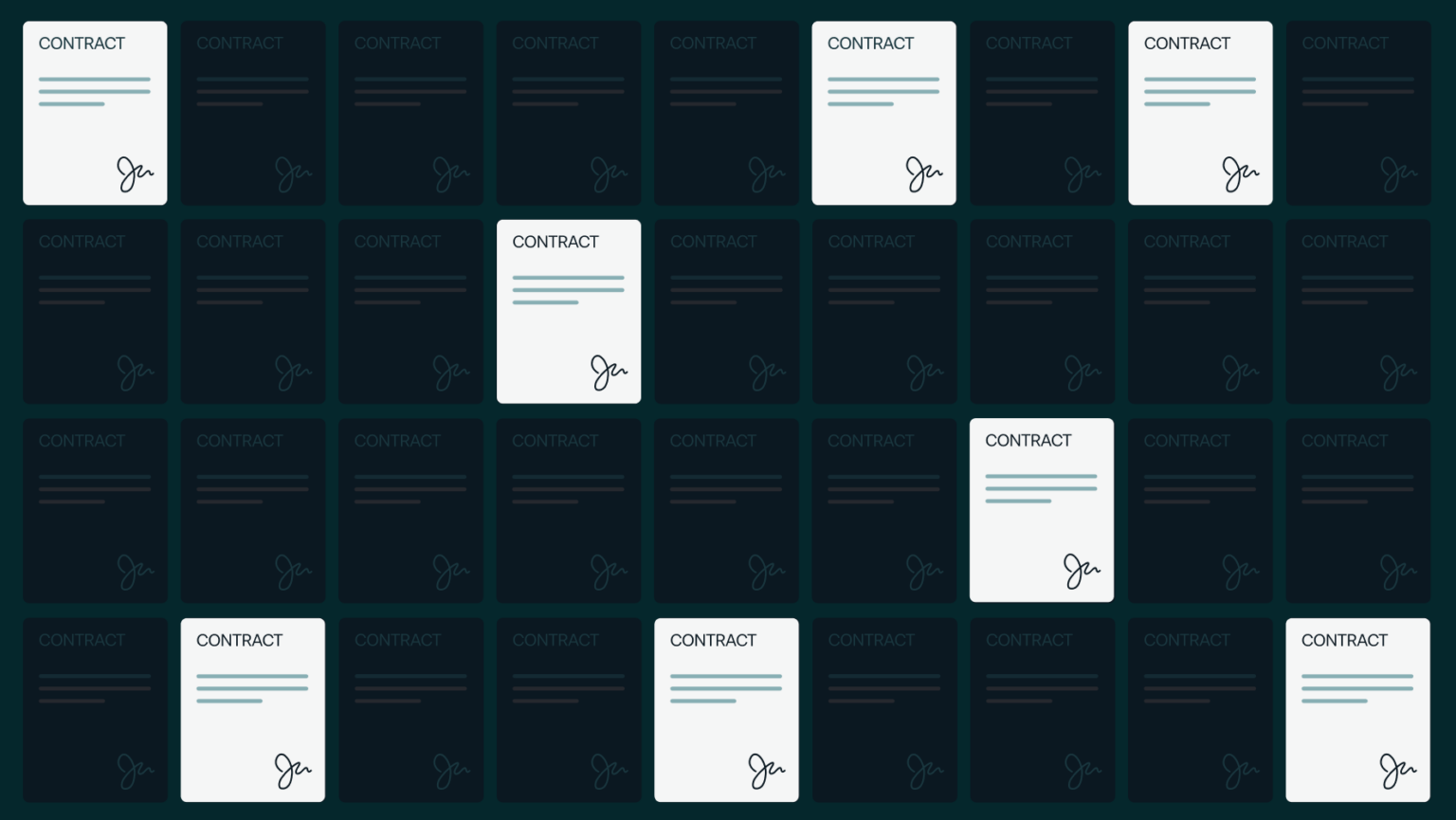
Across thousands of negotiations, those decisions have the potential to become one of the richest knowledge assets in the enterprise. And yet that memory rarely makes the trip into the next deal. The knowledge exists, but for 93% percent of organizations, it isn’t available in a form the organization can act on.
The gap rarely announces itself at once. And, what looks like a series of minor inefficiencies is usually one disorder wearing several disguises. When the knowledge the business has already acquired isn’t carried forward, every team is forced to start from scratch—producing less-informed redlines, longer close cycles, missed obligations, and unnecessary, context-poor rework across legal, procurement, finance, and operations. In short, the organization keeps paying to rediscover its own past.
Who owns this gap: the GC owns the institutional knowledge; the CIO owns the layer that makes it usable, and it’s the same layer the enterprise AI strategy depends on.
Five Signs Your Organization Has a Memory Gap
The signs tend to show up in ordinary work, where they are easiest to miss.
- Past contracts rarely inform upcoming agreements. Teams approach each new agreement as though it were an isolated exercise, leaving behind the hard-won knowledge and negotiating leverage accumulated in the deals that came before.
- Executed contracts often end up scattered across shared drives, email threads, local systems, and separate CLMs, with procurement, legal, and sales, each maintaining their own records. As a result, the business lacks a unified view of its commitments and has limited ability to learn from them.
- Contract data exists, but it is stale, standardized unevenly, or hard to find. Once the data goes out of date, everything downstream, from reporting to renewals to risk, starts to drift.
- Negotiation know-how sits with individuals rather than the institution. The important context lives in private expertise and personal folders no one else can see, so different regions end up using different fallback positions for the same issue.
- You cannot tell whether the contract data is current enough to trust. If no one can say how up to date the data is, then no one can be sure the business is working from the same version of reality.
If more than two of these sound familiar, the gap is no longer theoretical. It has already become part of the routine.
Why AI Can’t Fix the Memory Gap
The instinct is easy to understand: If the problem is lost knowledge, surely AI can retrieve it. It can summarize agreements, suggest clauses, identify obligations, and answer questions that once sent someone paging through PDFs for half the morning.
But AI can only work with what it can reach. If contract history is scattered across repositories and trapped in static documents, the system inherits those limitations. It does not recover what the organization never made usable.
That is why the results are uneven. Bain found that 61 percent of enterprises still depend on manual interpretation of documents to know what their own contracts say. WorldCC and Sirion report that 80 percent of organizations work from contract data that is not regularly refreshed.
An AI system reasoning over fragmented data does not fail quietly. It produces answers with enough confidence to make the problem harder to notice. AI does not create institutional memory, it amplifies the gap.
How Do You Close the Memory Gap? Five Steps
The answer is not simply to buy a better CLM platform. A system helps only if it begins to behave less like a filing cabinet and more like a working memory. The companies that make progress tend to start in a more modest place, by putting the foundation in order:
- Centralize legacy and live contracts in one trusted system of record, so teams stop working from conflicting versions of the truth.
- Extract the data that matters: clauses, obligations, risks, fallback positions, and the rationale behind key decisions.
- Standardize playbooks and clause libraries, so the business stops reinventing its own judgment.
- Surface obligations, milestones, and renewals, so post-signature work does not vanish into the archive.
- Then, and only then, apply AI, because AI is most effective sitting on top of clean, structured, trusted knowledge.
That is the difference between being able to find something and being able to use it. Want to know more about how memory gap compounds into visibility, consistency and delivery gaps? Download our latest ebook on “How to Get Contracting Right in the Age of AI”
Frequently Asked Questions (FAQs)
What is the memory gap in contract management?
The memory gap is the difference between the contracting knowledge an organization already has and its ability to actually use that knowledge across the business.
Why does the memory gap matter?
The memory gap often causes revenue leakage through missed obligations, unfavorable renewals, inconsistent pricing, and terms procurement cannot see; it increases legal and compliance risk; and it slows every deal by forcing teams to search, interpret, and renegotiate what the business already knows.
How does AI relate to the memory gap?
AI can help extract and summarize contract information, but it depends on clean, structured, and accessible data. If the underlying contract knowledge is fragmented, AI will reflect those same weaknesses.
How should organizations fix the memory gap?
They should centralize contract data, standardize templates and clause libraries, surface obligations and renewal dates, and connect contract intelligence to downstream functions like finance, procurement, and legal.
Is a CLM platform enough to solve the problem?
No. A CLM can help, but only if it is used to create operational memory rather than simply acting as a digital storage layer.
Why does this matter to the C-suite?
For the C-suite, the memory gap changes the conversation. Contract management is not just a legal function or a back-office process. It is where institutional knowledge is either preserved and activated or lost and relearned at cost. A company that cannot remember how it contracts will keep paying to rediscover itself. A company that can turn its contract portfolio into a living knowledge asset will move faster, negotiate better, and govern more confidently. The difference is not merely administrative. It is strategic.
Sirion is the world’s leading AI-native CLM platform, pioneering the application of Agentic AI to help enterprises transform the way they store, create, and manage contracts. The platform’s extraction, conversational search, and AI-enhanced negotiation capabilities have revolutionized contracting across enterprise teams – from legal and procurement to sales and finance.