The Use of AI in Procurement: Driving Efficiency in the Supply Chain
- Last Updated: Jun 28, 2026
- 15 min read
- Sirion
- AI in procurement automates complex processes.
Organizations can streamline sourcing, contract management, spend analysis, and supplier management while reducing manual effort. - Contract intelligence unlocks greater procurement value.
AI helps procurement teams monitor contractual obligations, reduce value leakage, and improve supplier accountability. - Better visibility drives smarter decisions.
Real-time insights into spend, supplier performance, and procurement activities support more informed business decisions. - Successful implementation requires preparation.
Strong data foundations, cross-functional alignment, and employee adoption are critical for long-term AI success. - AI strengthens supply chain resilience.
Predictive insights and proactive risk monitoring help organizations manage supplier risks and improve operational performance.
Procurement plays a critical role in an enterprise’s success, serving as the backbone that ensures the smooth acquisition of goods and services. This function directly impacts overall efficiency and cost-effectiveness within the supply chain. However, managing procurement effectively, especially on a large scale with multiple vendors and services, requires quick and easy access to specific data, including contract details, service terms and conditions, expected outcomes, rate cards, deadlines and more.
What Is AI in Procurement?
AI in procurement refers to the use of artificial intelligence technologies to automate, optimize, and improve procurement processes across sourcing, supplier management, contract management, spend analysis, and purchasing operations.
Modern procurement teams use AI to analyze large volumes of supplier, contract, and spend data that would be difficult to process manually. By identifying patterns, predicting risks, and automating repetitive tasks, AI helps organizations make faster, more informed procurement decisions.
As procurement functions become increasingly complex, AI is evolving from a productivity tool into a strategic capability that supports supplier performance management, cost optimization, risk mitigation, and supply chain resilience. When combined with Contract Lifecycle Management (CLM) platforms, AI provides deeper visibility into supplier agreements and contractual obligations, enabling organizations to extract more value from procurement relationships.
Use of AI in Procurement: Core Use Cases
- Strategic Sourcing and Supplier Selection
AI helps procurement teams evaluate suppliers more efficiently by analyzing supplier data, historical performance, pricing trends, and risk indicators. This enables organizations to identify the most suitable suppliers while reducing sourcing cycle times.
- Cost Optimization
AI continuously analyzes spend data, purchasing patterns, and contract terms to uncover cost-saving opportunities. Procurement teams can identify pricing anomalies, eliminate redundant spend, and negotiate more favorable supplier agreements.
- Contract Intelligence
AI extracts key information from supplier contracts, monitors contractual obligations, and identifies risks that may impact business outcomes. This improves visibility into contract performance and helps prevent value leakage.
- Automated Intake-to-Pay
AI streamlines procurement workflows by automating intake requests, approvals, invoice processing, and payment-related activities. This reduces manual effort while improving process consistency and compliance.
- Supplier and Risk Management
AI enables continuous monitoring of supplier performance, financial stability, compliance status, and operational risks. Procurement teams can proactively address issues before they disrupt the supply chain.
Learn how Agentic AI in Procurement automates sourcing, contracting, and supplier management to improve efficiency and decision-making.
Benefits of AI in Procurement: Enhancing Contract Management Efficiency
Integrating Contract Management with AI into procurement processes delivers a range of significant benefits:
- Reduced Manual Effort: AI automates tasks related to contract creation, maintenance, and , freeing procurement teams to focus on strategic activities and reducing overall administrative burden.
- Enhanced Decision-Making: Real-time dashboards deliver insights into obligation compliance and supplier performance, providing clearer data to support more informed decision-making.
- Minimized Value Leakage: AI analyzes supplier performance and spend data to uncover and address value leakage, ensuring better adherence to contracted terms and optimizing financial outcomes.
- Improved Risk Management: AI proactively monitors complex contractual obligations, identifying and alerting users to missed commitments and potential risks, thereby enhancing overall risk management.
- Spend Visibility: AI consolidates procurement, contract, and supplier data into a single source of truth. This gives procurement teams greater visibility into spending patterns, contract utilization, and supplier performance, helping identify opportunities for optimization and savings.
- Stronger Supplier Management: AI enables continuous monitoring of supplier performance against contractual commitments, service levels, and delivery expectations. This improves supplier accountability and supports more productive long-term supplier relationships.
AI in Procurement Examples and Case Studies
Organizations across industries are increasingly adopting AI to improve procurement performance and strengthen supply chain operations.
Unilever has used AI-powered analytics and automation to improve sourcing decisions and supplier management processes. By leveraging data-driven insights, the company has enhanced procurement efficiency while improving visibility into supplier performance.
IBM incorporates AI into procurement workflows to automate routine procurement activities and improve spend analysis. AI-driven insights help procurement teams identify cost-saving opportunities and optimize purchasing decisions across the enterprise.
Siemens uses AI technologies to improve supplier risk management and procurement planning. Automated monitoring and predictive analytics help the organization identify potential supply chain disruptions and mitigate risks before they impact operations.
These examples demonstrate how AI in procurement can improve sourcing outcomes, automate manual processes, strengthen supplier relationships, and generate measurable business value through better decision-making.
Discover Benefits of Contract Management in Procurement, from stronger governance and cost control to improved contract visibility.
Implementing AI in Procurement: Features, Best Practices, and Key Challenges
Key Features to Look for in AI Procurement Contract Management Software
AI contract management software addresses these challenges with several key features:
Self-Serve Contract Generation: Create contracts using pre-defined templates, reducing errors and standardizing processes.
Automated Review: Quickly review contracts with AI tools that highlight key terms and potential issues, expediting the approval process.
Digitization of Legacy Contracts: Convert old paper-based contracts into digital formats for easier management and analysis.
Contract Repository: A centralized repository for easy access to all contract data, improving organization and retrieval efficiency.
Pre-Built Integration: Integrate seamlessly with other procurement systems to reduce data silos and improve workflow efficiency.
Automated Obligation and Service Level Monitoring: Track compliance with contractual obligations and service levels in real-time, reducing manual oversight and ensuring adherence.
Analytics Dashboard: Gain insights into contract performance to make data-driven decisions.
Best Practices for Implementing AI in Procurement Step by Step
Identify Clear Use Cases
Start with specific procurement challenges where AI can deliver measurable value, such as contract analysis, supplier risk monitoring, or spend optimization.
Establish a Solid Data Foundation
AI effectiveness depends on data quality. Organizations should standardize procurement and contract data before deploying AI solutions.
Secure Cross-Functional Alignment
Successful AI adoption requires collaboration across procurement, legal, finance, IT, and operations teams to ensure consistent objectives and governance.
Prepare and Upskill Your Team
Procurement professionals should understand how AI works, how to interpret outputs, and how to integrate AI-driven insights into decision-making processes.
Scale and Embed Workflows
After successful pilots, organizations should integrate AI into day-to-day procurement workflows to maximize long-term value and adoption.
Challenges and Risks to Watch When Implementing AI in Procurement
Black-Box Decisions
Some AI models may produce recommendations without clearly explaining how conclusions were reached, making validation difficult.
Data Privacy and Security
Procurement data often contains sensitive supplier, pricing, and contractual information that requires strong governance and security controls.
Algorithmic Bias
AI systems trained on incomplete or biased datasets may generate skewed recommendations that affect sourcing and supplier decisions.
System Integration Issues
Integrating AI tools with existing procurement, ERP, and contract management platforms can be technically complex and resource-intensive.
Stakeholder Resistance
Employees may hesitate to adopt AI-driven processes without clear communication, training, and demonstrated business value.

Traditional Contract Management Is Holding You Back
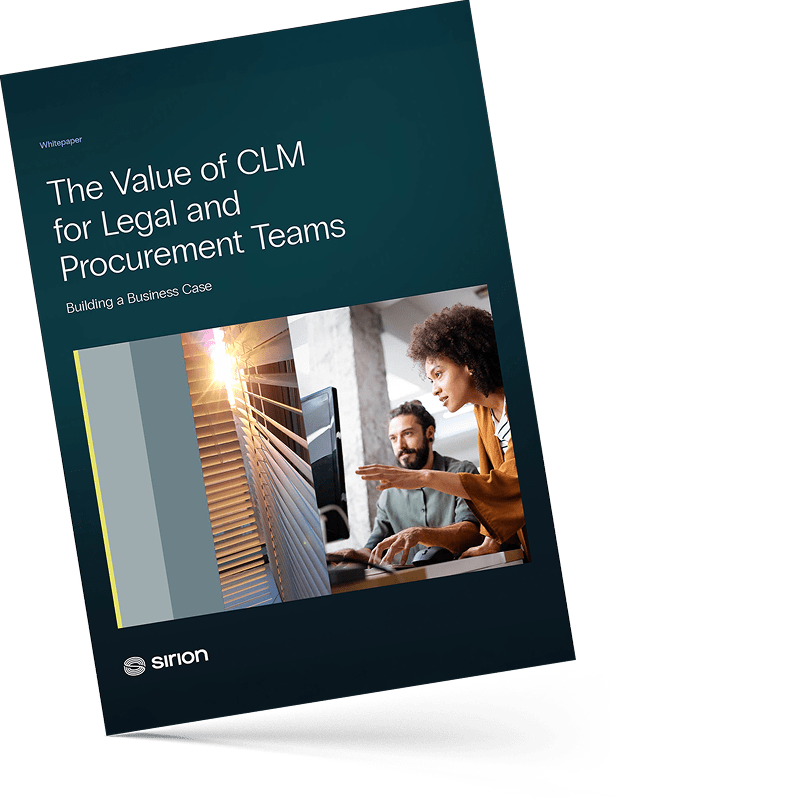
Learn how AI-driven CLM transforms legal and procurement in our report: The Value of CLM for Legal and Procurement Teams.
Why Choose AI CLM Over S2P and P2P Platforms?
While Source-to-Pay (S2P) and Procure-to-Pay (P2P) platforms traditionally manage procurement processes, they focus primarily on transactional data and manual effort, which can result in fragmented processes. AI-powered Contract Lifecycle Management (CLM) systems offer significant advantages by providing deeper contract intelligence. These systems analyze terms, obligations, and performance metrics to deliver actionable insights that enhance decision-making and risk management. CLM systems automate and standardize the entire contract lifecycle, from creation and negotiation to compliance and renewal. Moreover, they promote cross-functional collaboration by integrating seamlessly with various business systems, ensuring that contract data is accessible across departments such as legal, procurement, finance, and sales. This unified approach enhances overall contract management and drives supply chain efficiency, making CLM a superior choice for organizations seeking to streamline operations and gain a competitive edge.
AI in Procurement: Leveraging CLM Platforms for Teams
Sirion’s CLM platform leverages AI to provide advanced insights into supply chain efficiency. It offers a comprehensive view of the entire supplier base and existing contracts, helping to consolidate redundant vendor spend and optimize supplier management. The platform provides insights into supplier delivery performance, obligation fulfillment status, and financial outcomes, enhancing decision-making and value extraction from contracts.
Users experience a decrease in hard value leakage of 6-12% on average, improving cost control and value realization. Data-driven issue resolution fosters stronger supplier relationships, leading to more collaborative partnerships. Sirion also identifies and addresses bottlenecks in RFP and contracting processes, improving overall efficiency.
Learn how AI-Native CLM for Procurement streamlines contracting, strengthens supplier governance, and improves procurement performance.
Key Takeaways: Leveraging AI for Smarter Procurement
AI in procurement is transforming how organizations manage sourcing, supplier relationships, contracts, and spend. By automating routine activities, improving visibility into supplier performance, and delivering actionable insights from procurement data, AI enables procurement teams to operate more strategically and efficiently.
When combined with AI-native contract lifecycle management capabilities, procurement organizations can strengthen compliance, reduce contractual value leakage, improve supplier outcomes, and make better-informed decisions across the supply chain. As AI adoption continues to accelerate, organizations that invest in the right technology, data foundation, and governance framework will be best positioned to realize long-term procurement value.

Experience AI-Native CLM in Action
See how Sirion transforms contracting with automation, compliance, and faster time-to-contract.
Frequently Asked Questions (FAQs)
How does AI help reduce procurement costs and prevent revenue leakage?
AI analyzes spend patterns, supplier performance, and contract terms to identify inefficiencies, pricing discrepancies, and missed obligations. This helps procurement teams reduce unnecessary spending, improve compliance with negotiated terms, and minimize contractual value leakage.
How can AI forecast demand and optimize spend analysis?
AI evaluates historical purchasing data, market trends, supplier information, and operational patterns to forecast future demand. These insights help organizations optimize purchasing decisions, improve inventory planning, and allocate budgets more effectively.
How does AI support supplier performance tracking and benchmarking?
AI continuously monitors supplier delivery performance, service levels, compliance metrics, and contractual commitments. Procurement teams can benchmark suppliers, identify underperformance early, and make data-driven decisions regarding supplier relationships.
Why are pilot projects important before scaling AI in procurement?
Pilot projects allow organizations to validate business value, identify implementation challenges, and measure outcomes before broader deployment. This approach reduces risk and helps build organizational confidence in AI-driven procurement initiatives.
How can AI help identify hidden risks in supplier contracts?
AI can review large volumes of contract data to identify unfavorable clauses, compliance gaps, missed obligations, and supplier-related risks. This enables procurement teams to proactively address issues before they impact business performance or supply chain operations.
Additional Resources