














Avoid failed implementations and bolt-on AI. Choose a platform built to perform – not just promise.
Extraction is limited to a small number of fields OOTB
Extract thousands of fields across metadata, clauses, obligations, service levels and more
Flat repository, no parent-child hierarchy
Hierarchical, folder-structure, fully searchable repository
Manually built, rule-based playbooks
Playbook creation via conversational prompts
Redlines clauses in isolation, no issue-level granularity
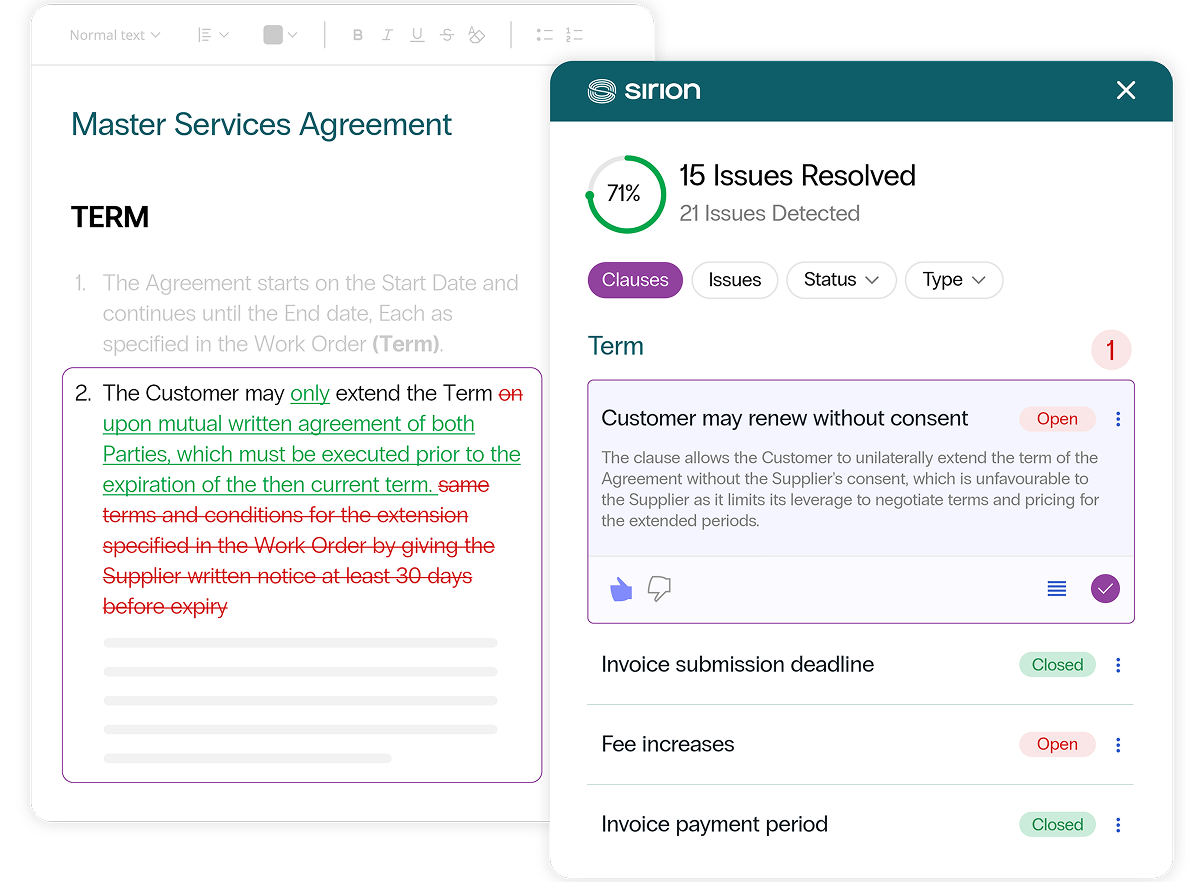
Issue-level drill down for precise confident negotiations
Limited extraction restricts reporting capabilities
Full BI engine. Ability to create custom records
Integrations are complex and lack enterprise depth
Deep OOTB integration with SAP, Oracle, Salesforce, and more
Configuration changes mostly need vendor or IT support
Fully self-serve, no-code configuration across the platform
Dated, everyday actions feel complex
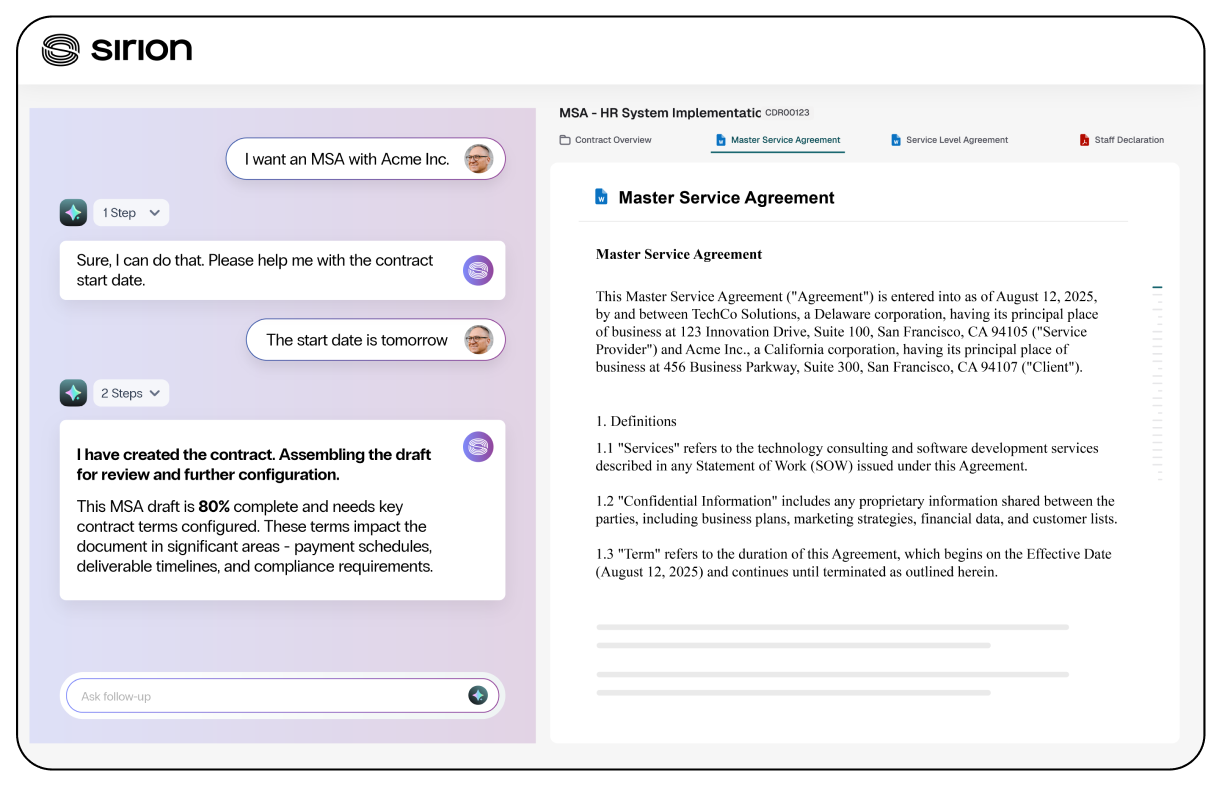
Modern, consumer-grade experience with conversational contracting
Empower business users to configure workflows, templates, clause libraries, and AI models – without depending on IT or vendor teams. Leverage AgentOS to design, deploy, and orchestrate custom agents that work together and connect with enterprise data to automate complex workflows.
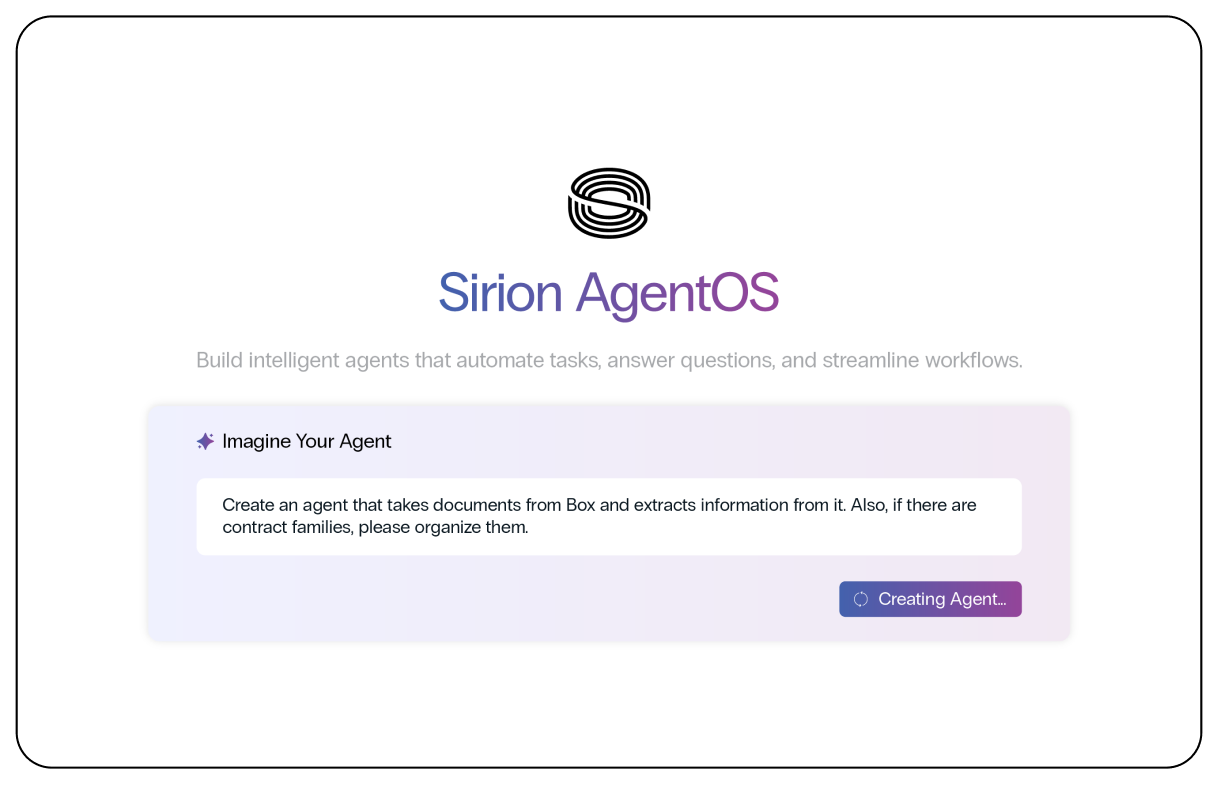
Specialized Agents embed intelligence into drafting, negotiation, extraction, and post-signature performance to automate outcomes across the contract lifecycle.
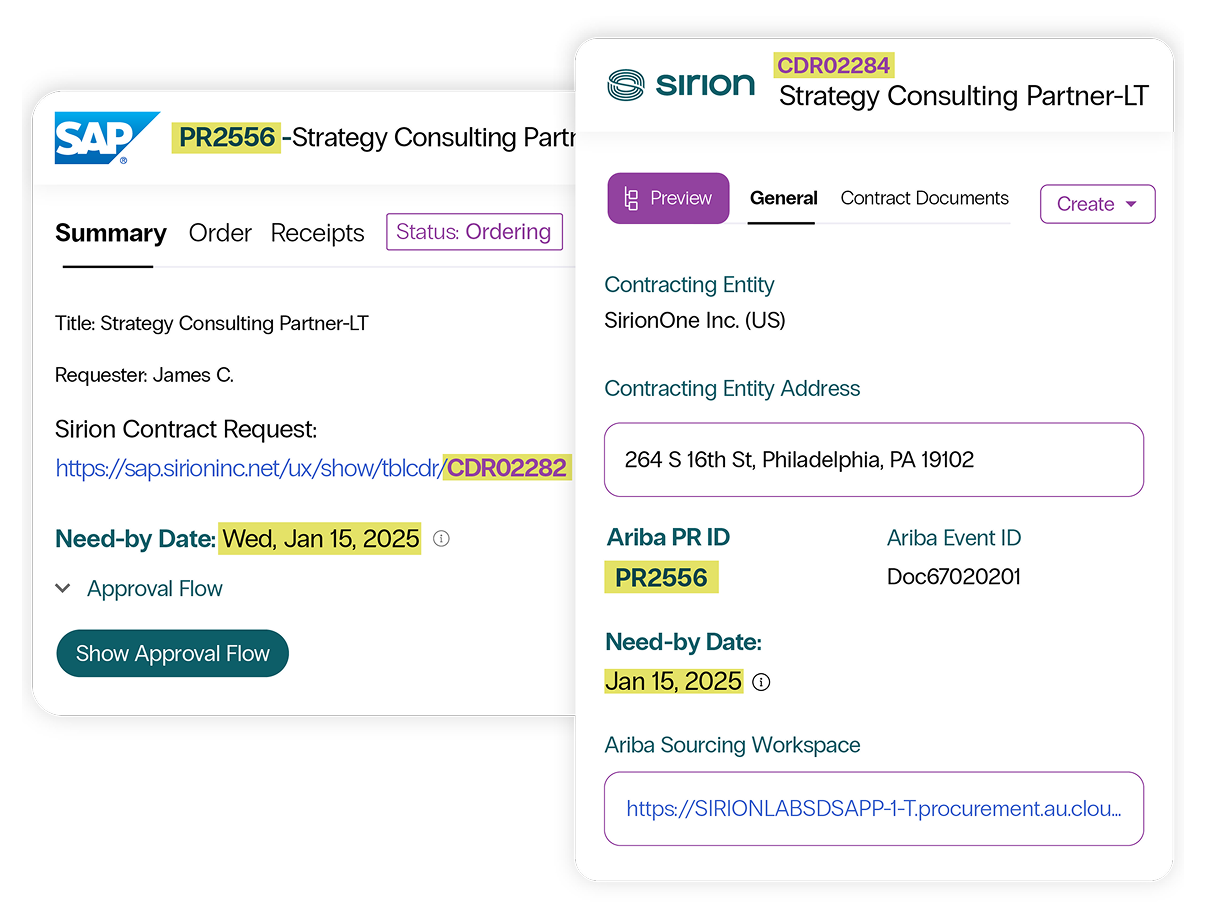
Empower teams to work with contracts in the tools they trust and use every day. Use OOTB integrations for platforms like Salesforce, SAP, and Microsoft – or leverage robust B2B APIs to connect with any third-party application seamlessly.
An intuitive interface, conversational capabilities, and clear lifecycle visibility accelerate user adoption across legal, procurement, and business teams – reducing friction from day one.

The Gartner Peer Insights Customers’ Choice badge is a trademark and service mark of Gartner, Inc., and/or its affiliates, and is used herein with permission. All rights reserved.
“As part of our contract digitization program, we didn’t want to stop at just putting our contracts in the cloud. We wanted complete visibility and control over the deliverables and obligations in our contracts. We found the perfect answer in Sirion.”
“All our contracts are established and maintained in Sirion, a fit-for-purpose CLM solution. Today, we manage all our regulatory requirements, adapt smartly to banking changes and leverage rich insights for real-time reporting, through Sirion.”
“Some of the biggest highlights of working with Sirion for me have been watching how the technology has changed over time. And how it gets better and better every single time new functionality is released.”
“Sirion has really transformed how we work with contracts. Now, we have a single source of truth for contracts, giving us better visibility and transparency. The tool's intuitive interface and automated workflows have simplified our processes, enabling seamless collaboration during drafting and negotiations, with fast and accurate AI-assisted legal reviews & approvals.”
“AI is fundamentally reshaping contracting — from drafting agreements with minimal human input, to reviewing and redlining at scale, to empowering attorneys to negotiate faster and more effectively. It’s exciting to be part of this journey as the vision moves closer to reality, and Sirion’s agentic CLM platform marks an important step forward.”
Not at all. Most organizations start by migrating their repository or extraction layer first, then expand into authoring, negotiation, and performance. Sirion’s modular design and open integrations make the transition low-risk and phased.
No. Sirion can ingest and enrich existing templates, clause libraries, and metadata — turning your legacy assets into dynamic, searchable, and AI-driven building blocks for faster authoring and negotiation.
Far less. Sirion’s interface and conversational agents make adoption easier for business users, while no-code configuration empowers business teams to make changes themselves without heavy IT intervention.
Sirion’s AgentOS lies at its core, enabling generative AI-driven automation across the platform. Icertis continues to add separate copilots instead of embedding AI into its foundation.
Sirion is known for its responsive, high-touch customer support and dedicated customer success teams that stay engaged beyond deployment. Icertis support is often slower to respond and more ticket-driven, which can delay issue resolution in large deployments.
Both platforms support enterprise integrations. Sirion offers open, configurable integrations that are easier to deploy and extend, while Icertis integrations are typically more vendor-managed and tightly coupled to specific ecosystems.
For enterprises focused on faster deployment, lower maintenance and complete lifecycle intelligence, Sirion is the more future-proof choice. But for enterprises that are already deeply tied to Icertis and are comfortable with vendor-managed configurations, Icertis may suffice.