
S1 E1: What is CLM?
Welcome to the opening episode for the CLM Navigator series. In this episode, we explain what contract lifecycle management is, why it matters in the enterprise, and why a CLM initiative works best when it is approached as one connected platform across the full lifecycle.
- Last Updated: Mar 12, 2026
- 6 min
- by Gordon Thompson
Things covered in this episode
- What CLM is and why it belongs in the enterprise landscape
- Why “checklist CLM” and bolt-on point solutions often leave gaps
- The core problems CLM is expected to solve — visibility and control, standardization, cycle time reduction, risk and compliance
- A simple three-part model for the CLM lifecycle: Store, Create, Manage
“CLM really is the glue that holds all the relationships between a company, their customers, their suppliers, their employees.”
Key moments

00:38
Why CLM is treated as a system of record
01:32
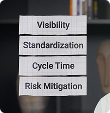
The four problems CLM must solve
02:50
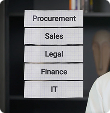
How checklists and point solutions distort CLM
03:55
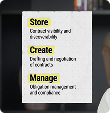
The Store-Create-Manage platform model
04:57
Why tracking contract performance drives long-term ROI
Actionable insights
- Start with the business problems, not a feature checklist:
CLM is commonly expected to improve visibility and control, standardize contracting, reduce cycle time, and strengthen risk and compliance.
- Use Store-Create-Manage to define CLM scope clearly:
Store
An intelligent contract repository with contract data extraction to make executed agreements searchable and usable.
Create
Contract authoring, collaboration, contract negotiation, and signature (including handling templates or third-party paper).
Manage
Post-signature contract management including obligations management, and ongoing commercial tracking across the contract term.
- Track value through the performance of your contracts:
Long-term ROI comes from managing what happens after signature — obligations, service expectations, and commercial outcomes, not just storing documents or accelerating drafting.
- Define your enterprise-wide CLM needs:
Different teams use “CLM” to mean different things. A shared lifecycle definition across Legal, Procurement, Sales, Finance, and IT prevent mismatched expectations and avoids buying the wrong thing for the right reasons.
Read full transcript
Hi, I’m Gordon Thompson. We’re introducing a new series called CLM Navigator. This series is intended to help you understand what a CLM transformation involves, all the way from the initial evaluation of which vendors to go with, through how you solve your business problems with your contracting solutions today within your organizations, across multiple stakeholders.
So, CLM stands for Contract Lifecycle Management. CLM is one of the first-class entities within your enterprise landscape. We consider it the fifth system of record. What are the other four? You have CRM, which owns your customer master. You have ERP, which owns your financial data. You have supply chain management, which owns your procurement and suppliers. And you have HRMS, which owns your employees.
We feel that Contract Lifecycle Management should be the fifth system of record, given the importance of how contracts create that binding relationship across all your relationships within an organization. If you think about it, CLM really is the glue that holds all the relationships between a company, their customers, their suppliers, and their employees. It is the glue that holds all that together.
There are several problems we’re trying to solve with Contract Lifecycle Management. The first is visibility and control. Do you understand what’s in your contracts? Do you have access to your contracts? Are you controlling the language that goes into those contracts? The second area people originally used CLM for was standardization: Do we have standard templates? Do we have standard clauses? Do we have standard positions we want in our contracts that will give us the most favorable outcome?
If you’re looking at it from a sales perspective, and even a procurement perspective, cycle time reduction is another major problem CLM is trying to solve by automating the authoring process and the collaboration between prospects and suppliers. Lastly, risk and compliance: Every organization wants to understand what risk they have, what exposure they have within their contracts once they’ve been executed, and to make sure they have regulatory compliance built into their contracts to protect the overall interest of the company.
Contract Lifecycle Management has been around for 15 to 20 years, depending on who you ask. A lot of the suite players like Oracle and SAP have used contracts as part of their overall suites. Since the beginning, in the early days, vendors also sold what buyers could approve. And as a result, you get a lot of point solutions in the market today that solve a very specific problem.
Whether you’re in procurement, sales, legal, finance, or IT, you may have different definitions of what a true CLM solution is. As RFPs and RFX started coming out into the market, they became an aggregated list of all these different functions. Ultimately, that ends up being a simple checklist of features and functions that each organization would like to see in their CLM solutions for their piece of the puzzle.
In the early days of CLM, implementations were not very successful. User adoption was not very high, and CLM only solved a portion of the problem.
It’s best not to think about Contract Lifecycle Management as a best-of-breed solution where you buy various bolt-on applications to solve very specific problems. Instead, it’s best to think about your CLM solution as an overall platform. That platform should contain three core pillars.
The first is Store: you want to be able to extract critical information out of your contracts and have all your contracts sitting in a single intelligent repository that gives you full visibility into your executed contracts.
The second pillar is Create: the creation of contracts. How do you create the contract draft request? How do you use your own templates, or handle third-party paper? How do you collaborate with prospects or suppliers to negotiate that contract, and ultimately take it to signature to execute the contract?
The third area is Performance. Once a contract is executed, how do you make sure you’re adhering to the obligations, service levels, and price books set forth in that contract over the life of the contract? The performance portion of a CLM solution is the long pole in the tent. You don’t see immediate benefit from it, but over the life of that contract, the ROI from performance can really dwarf the creation and storage of contracts.
You want to make sure your contract solution has all three of these components, and it needs to be in a single platform, not a best-of-breed solution.
We hope you find this series interesting and educational, that you get something out of it, and that you can start your CLM transformation very quickly.
S1 E1: What is CLM?
Who this episode is for
If you’re involved in contracting decisions or execution across Procurement, Sales, Legal, Finance, or IT, this episode helps align expectations around what “CLM” should cover end to end
Additional Resources
Frequently Asked Questions
What is Contract Lifecycle Management (CLM)?
Contract Lifecycle Management (CLM) is the set of processes and systems used to manage contracts from request and drafting through negotiation, signature, storage, and ongoing obligations. It is often treated as a core enterprise capability because contracts create binding relationships across customers, suppliers, and employees.
What problems does CLM solve?
CLM is commonly used to improve contract visibility and control, drive contract standardization (templates and clauses), reduce contract cycle time, and strengthen contract risk management and compliance.
What is the difference between a contract repository and CLM?
A contract repository focuses on storing executed agreements. CLM spans the full lifecycle, including contract creation, negotiation, signature, and post-signature contract management such as obligations and performance tracking. A repository can be part of CLM, but it is not the whole system.
What is “post-signature contract management”?
Post-signature contract management covers what happens after a contract is executed, including tracking and meeting contract obligations, service levels (SLAs), and commercial terms like pricing. It is often where long-term value and ROI are realized over the life of the agreement.
What is contract obligations management?
Contract obligations management is the process of ensuring the organization meets the responsibilities defined in a contract, such as deliverables, timelines, notices, service levels, and pricing commitments. It is a core part of ongoing contract performance management.
How do you evaluate a CLM platform?
A useful starting point is to evaluate whether a CLM solution supports the full lifecycle in one connected platform across Store, Create, and Perform, rather than relying on bolt-on tools or a checklist of disconnected features.
Who uses CLM software in an organization?
CLM is typically used across multiple stakeholders, including Legal, Procurement, Sales, Finance, and IT, since each group interacts with contracts in different ways and often has different expectations of what “CLM” should cover.