
S1 E3-Part 1:
Five Questions to Ask Yourself Before Choosing a CLM Solution
Selecting a CLM isn’t a software decision. It’s a business one. Yet most teams start with demos, not direction. Before you invest in CLM, get clear on three things: the outcomes you need where your contracts live today, and how this will actually help your teams. The right decision starts with the right questions.
- Last Updated : April 15, 2026
- 04:19 min
- by Gordon Thompson
What’s Covered in This Episode:
- Why starting with outcomes, not features, changes CLM success entirely
- How defining clear business problems sharpens every vendor evaluation conversation
- How mapping your contract landscape reveals hidden complexity before implementation
- The adoption questions most teams miss, and why it determines ROI
"Your CLM should turn contracts from static documents into structured accessible information."
Key moments
00:55
What problem are you actually trying to solve?
02:03
What does your contract landscape actually look like?
03:19
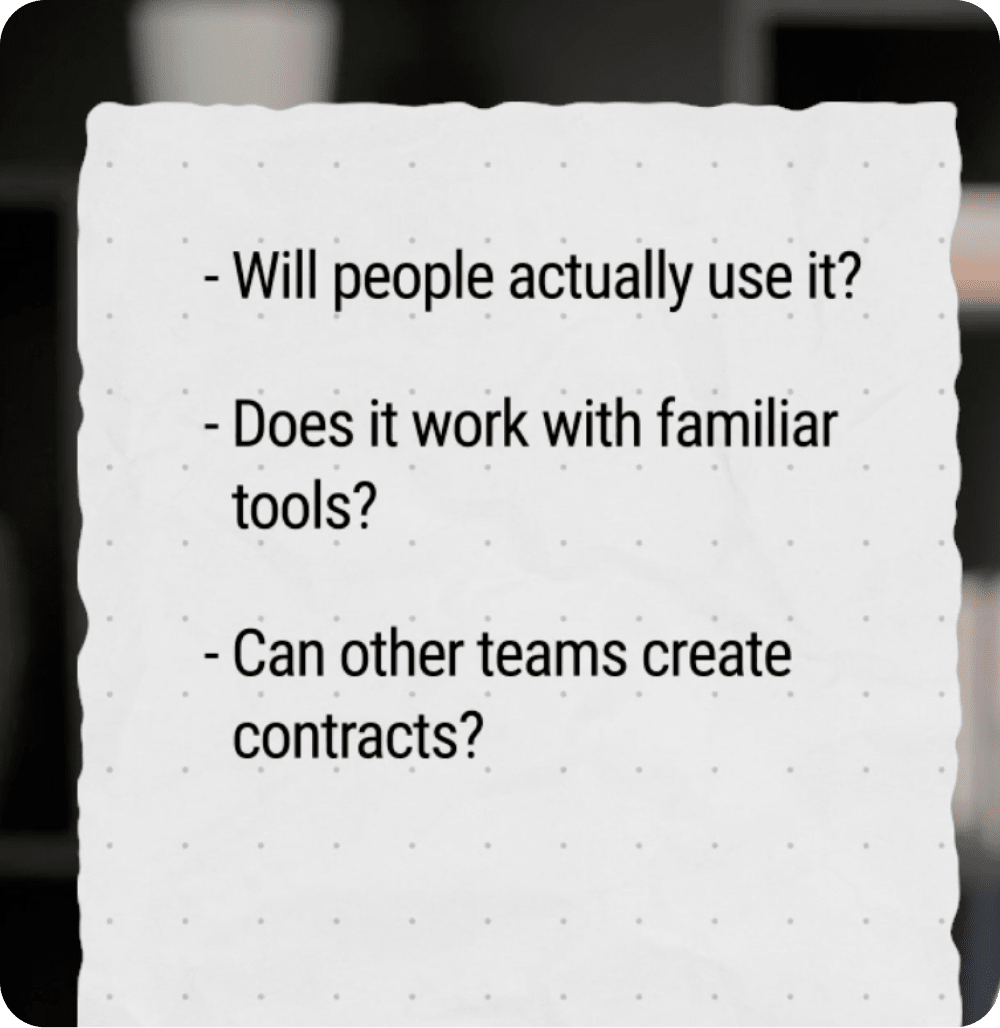
Will people actually use the system?
04:01
Does it work with tools your teams already rely on
04:07
Can procurement or sales team generate contracts from the systems where they work?
Actionable insights
- Start with Outcomes, Not Features: Before engaging a CLM vendor, define your top measurable outcomes. Assess whether these outcomes will help cut cycle time, improve supplier visibility, and manage risks easily.
- Audit Your Contract Landscape First: Contracts rarely live in one place. Before selecting a platform, map where your agreements actually sit, from shared drives, email threads, to procurement systems, and assess whether a CLM can ingest, extract, and make sense of your legacy data.
- Adoption is the Real Success Metric: A CLM that only legal uses isn’t a CLM. Evaluate whether the platform works inside the tools your procurement, sales, and finance teams already rely on, and whether it enables self-service without sacrificing governance.
Read full transcript
Choosing a CLM sounds easy, right?
You write an RFP, watch demos, you compare features and somehow every platform looks similar.
So you pick one.
However, 2 years later, the system isn’t widely used.
Your contracts are still sitting in silos, teams are still chasing information.
Why?
Because most companies ask the wrong questions.
So most companies don’t choose the wrong CLM, they simply compare features instead of asking what really matters.
So in this episode I want to walk through 5 questions you should ask when evaluating a CLN platform.
These 5 questions will help you focus on what really matters to your business.
So what problem are you actually trying to solve?
Before you talk to single vendor, start here.
What is the real business problem your organization wants to fix?
Contracting slows companies down in different ways.
For some organizations, the biggest issue is cycle time.
It takes too long to get agreement signed.
For others, the problem is visibility.
Once contracts are signed, people may lose track of what their commitments are.
Sometimes the issue is risk, like mis renewals or poorly tracked obligations.
And sometimes it’s simply that too many teams depend on legal for information they should be able to access themselves.
So instead of starting with a 200 line RFP, start by defining 3 to 5 outcomes you want to CLM system to deliver.
For example, reducing cycle time from 90 days to 30, improving visibility into your supplier commitments, or preventing revenue leakage from MIS renewals.
These outcomes should guide every vendor conversation you have.
If you don’t define the problem first, every platform will look good.
The second question you should ask is what does your contract landscape actually look like?
So this is a question many companies underestimate.
Where are your contracts today?
In reality, contracts rarely live in a single system.
They’re often scattered across shared drives, SharePoint folders, procurement systems, email threads, and personal archives.
Over time, this creates a fragmented contract landscape.
We’re finding a single agreement can take hours.
Large organizations frequently discover their contract data is spread across dozens of different systems.
So when evaluating a CLM platform, it’s important to focus on not just managing new contracts, but on what happens to your existing agreements.
Firstly, can the platform easily integrate with existing systems where contracts are currently stored?
Next, can the platform ingest legacy contracts?
Next, can it extract key data from those agreements automatically?
And lastly, once those contracts are inside the system, can teams easily search and understand them?
Your CLM should turn contracts from static documents into structured accessible information.
A system of record that you can trust.
The 3rd question you need to ask is will people actually use the system?
Adoption is where many CLM initiatives succeed or fail.
Contracts may be legal artifacts, but they involve procurement teams negotiating supplier agreements, sales teams working with customer contracts, finance teams tracking pricing and payment terms.
In fact, WCC estimates that nearly 25% of employees in an enterprise interact with contracts in some way.
So when evaluating CLM platforms, you must ask, will people actually want to use this system?
Does it work with tools your teams already rely on like Word, Outlook, Salesforce, Arriba, Oracle?
Can procurement or sales team generate contracts from the systems where they work or does every request still need to go through legal?
The more a CLM platform enables self service with any structure controls, the more valuable it becomes across the organization.
So these 3 questions can get you started.
In the next episode, we will conclude with 2 more key questions, so don’t forget to tune in.
See you then.
S1 E2-Part 2: Why Do Enterprises Buy CLM?
Contracts are the pulse of your entire business. In Episode 2, Part 1 we explored why legal and procurement are often the first teams to adopt CLM. In Part 2 of Episode 2, we bring the focus on sales, finance and IT. Ready to deep-dive to see how a cross-functional approach to CLM turns siloed data into shared intelligence.
Additional Resources
 5 min read
 Why Your Deal Cycle Velocity Numbers Are Lying to You

Stop Clicking. Start Asking: The CLM Experience Shift
Frequently Asked Questions
Why should one define business outcomes before writing an RFP?
It is because without clear outcomes, every platform will look equally capable. Defining 3–5 measurable goals, like reducing cycle time from 90 days to 30 or eliminating missed renewals, gives you a filter that no demo can manipulate.
What does "contract landscape" mean, and why does it matter?
It refers to where your contracts actually live today, i.e., shared drives, email threads, SharePoint, procurement systems, and personal archives. Understanding the business landscape determines whether a CLM can handle not only new contracts but also the legacy agreements already scattered across your organization.
Can a CLM ingest contracts from multiple existing systems?
It should. Before selecting a platform, ask whether it can integrate with your current storage systems, ingest legacy contracts, automatically extract key data, and make those agreements searchable across teams.
Why is adoption the question most evaluators overlook?
According to World CC, nearly 25% of enterprise employees interact with contracts in some capacity. Thus, it is critical to assess whether the CLM suits the needs of the entire organization. A system that only legal uses doesn’t deliver enterprise value. Adoption depends on whether the CLM integrates with the tools that those teams already rely on.
What does self-service contracting actually mean in practice?
It means procurement or sales can generate contracts from the systems without depending on legal or routing every request through legal. The right CLM simplifies integration with built-in controls, so speed and governance aren’t in conflict.
What are the 5 questions this episode covers?
Episode 3, Part 1 covers the first three: What problem are you actually trying to solve? What does your contract landscape look like? Will people actually use the system? Tune into Part 2 for the final two.