AI-native vs Rule-based: Enterprise CLM Workflow Orchestration Decoded

- Last Updated: Jan 07, 2026
- 15 min read
- Sirion
Enterprise contract workflow orchestration flips from rigid checklists to intelligent flow when an AI-native CLM leads the show. By grounding every clause, obligation, and approval in real-time machine learning, AI-native CLM unlocks scale and insight that rule-based tools can’t reach.
Why Workflow Orchestration Starts With an AI-Native CLM Mindset
AI-native solutions are built from the ground up with artificial intelligence at their core, unlike bolt-on AI solutions which are added to existing systems. This fundamental architectural difference shapes how contract workflows operate at every level.
Contract AI transforms how enterprises manage agreements by leveraging artificial intelligence to automate and enhance various aspects of contract management. The technology moves beyond simple automation to create intelligent orchestration that adapts to each contract’s unique context and requirements.
Recent surveys reveal that 65% of legal departments now utilize AI-powered contract management solutions, marking a significant 14 percentage point increase over the past two years. This rapid adoption signals a fundamental shift in how enterprises approach contract workflow orchestration.
The difference between AI-native and rule-based approaches becomes clear in their core design philosophy. While traditional systems follow predetermined paths, AI-native platforms learn from patterns across millions of contracts to suggest optimal workflows. They recognize nuanced language variations, flag unusual terms automatically, and route approvals based on intelligent risk assessment rather than rigid hierarchies.
The Rule-Based CLM Playbook: Where It Breaks Down
Traditional CLM systems operate on sequential logic that struggles with real-world complexity. Most CLM systems don’t support multiple people working on the same contract at once, forcing teams into inefficient serial workflows when parallel collaboration would accelerate completion.
The limitations extend beyond collaboration. Rule-based systems treat workflow as an ordered, sequential process: do A, then B, then C. This rigid structure fails when contracts require dynamic routing based on evolving negotiations or when exceptions demand immediate escalation. Every deviation from the predefined path requires manual intervention, creating bottlenecks that compound across the organization.
According to WorldCC, complex international contracts take an average of 26 weeks to complete. This extended timeline reflects the fundamental mismatch between rule-based systems and the fluid nature of modern contracting. When every minor change triggers a new approval cycle and creates a new document version, the system itself becomes the constraint.
Rule-based CLMs also struggle with scalability. As organizations grow and contract volumes increase, the maintenance burden of updating rules, managing exceptions, and coordinating between disconnected systems becomes overwhelming. Contracts are inherently chaotic, unstructured data sources that resist the neat categorization rule-based systems require.
The failure rate tells the story. Traditional CLM systems often promise comprehensive transformation but deliver poor user adoption, metrics that don’t improve, and rollouts that never quite make it company-wide. The technology exists, but without intelligence at its core, it cannot adapt to the complexity of enterprise contracting.
Inside an AI-Native CLM Engine: Data, Models, and Orchestration Logic
AI-native platforms process up to a million documents daily, with customers reporting “as much as a 50% uptick in the tasks they have been able to automate with Sirion.” This dramatic improvement stems from fundamental differences in how AI-native systems process and understand contracts.
The extraction agent combines precision of small data AI with the cognitive power of large language models to extract data from any document. Unlike rule-based engines that fail when encountering unexpected formats, AI-native systems adapt to variations in language, structure, and context.
Sirion was built from the ground up as an AI-native platform: trained on 10M+ enterprise contracts and tailored for both buy- and sell-side use cases. This massive training dataset enables the system to recognize patterns, predict risks, and suggest optimal workflows based on real-world contract intelligence rather than theoretical rules.
The orchestration logic in AI-native CLM operates through multiple layers of intelligence. Natural language processing identifies intent and extracts meaning from unstructured text. Machine learning models assess risk levels and predict negotiation outcomes. Reinforcement learning continuously improves routing decisions based on historical performance. These technologies work together to create workflows that adapt dynamically to each contract’s unique requirements.
Integration capabilities amplify the power of AI-native orchestration. Modern platforms connect seamlessly with SAP, Oracle, and other enterprise systems, syncing contract activity with the broader business ecosystem for end-to-end automation. This deep integration enables AI to consider factors beyond the contract itself: supplier performance, market conditions, regulatory changes: when orchestrating workflows.
Speed, Savings, and Compliance: Proven Outcomes of AI-Native CLM
AI-powered redlining delivers 60% faster contract reviews while identifying three times more issues than manual processes. This combination of speed and accuracy transforms contract negotiation from a bottleneck into a competitive advantage.
Vodafone reduced supplier disputes by 80% after implementing full lifecycle CLM with AI-native orchestration. The platform’s ability to track obligations, monitor performance, and flag potential issues before they escalate drove this dramatic improvement in supplier relationships.
A telecommunications company achieved $21 million in savings through AI-powered contract analytics. By extracting and analyzing data from over 750,000 tower rental contracts, the AI system identified optimization opportunities invisible to manual review.
The financial impact extends beyond direct savings. Organizations report up to 9% value leakage from poor contract management: revenue lost through missed obligations, unclaimed rebates, and compliance failures. AI-native CLM addresses each of these failure points through intelligent monitoring and proactive alerts.
Compliance improvements prove equally significant. Automated obligation tracking ensures critical deadlines never slip through the cracks. Real-time regulatory monitoring keeps contracts aligned with changing requirements. Risk scoring prioritizes review resources where they matter most. Together, these capabilities reduce compliance violations while freeing legal teams from routine monitoring tasks.
How Analysts and Peers Rank CLM Platforms
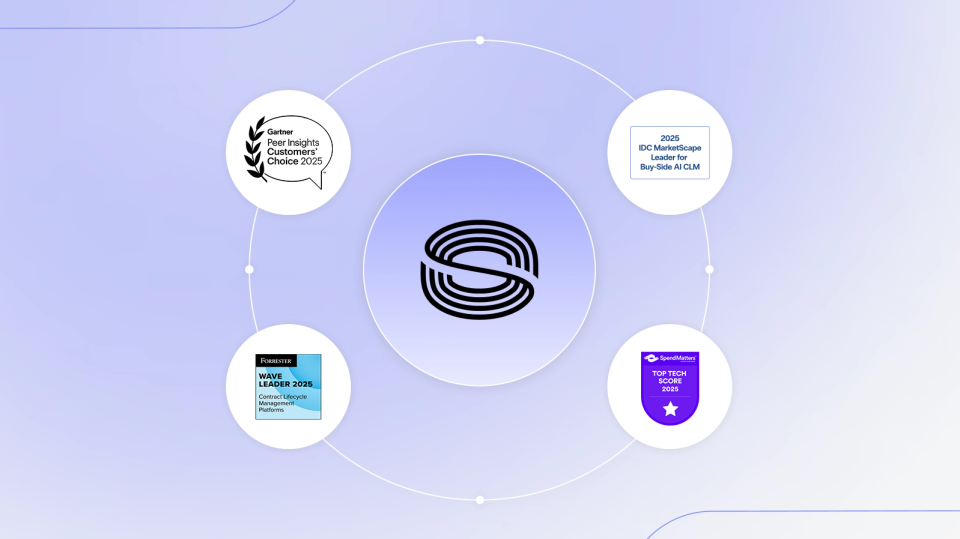
Sirion has been named a Leader in the 2024 Gartner Magic Quadrant for Contract Lifecycle Management for the third consecutive year, reflecting consistent innovation and market execution in AI-native CLM.
Spend Matters analysis highlights that “While some CLM solutions have historical strengths in certain areas of contract management, SirionLabs is a true enterprise CLM solution applicable to buy side, sell side and other legal department use cases.” The report emphasizes unique post-signature capabilities including obligation management and AI-powered analytics.
User reviews consistently praise the platform’s intuitive interface and AI capabilities. Banking groups report growing usage year over year, particularly highlighting auto-extraction of metadata from contracts. The dashboards provide efficient snapshots across multiple suppliers, while the contract tree function simplifies navigation through complex agreement hierarchies.
The enterprise license model receives particular attention from users who note feature parity with other leading vendors at attractive pricing. Organizations value the balance between out-of-the-box functionality and bespoke capabilities tailored to specific needs.
Analyst rankings reflect a broader market trend toward AI-native solutions. Legacy vendors struggle to retrofit intelligence into rule-based architectures, while purpose-built AI platforms demonstrate superior performance across functionality and customer satisfaction benchmarks. The market recognizes that true transformation requires intelligence at the core, not as an afterthought.
Implementing AI-Native CLM Without Creating Shadow AI Risks
GenAI accelerates contract review by identifying clauses that deviate from organizational standards and providing automated redlining. However, implementation requires careful governance to prevent unauthorized AI use that could compromise data security.
Leading organizations recognize that “AI is a game changer in ITES. Effective AI governance models will help data protection, compliance and regulatory approval and business values.” This governance starts with selecting platforms designed specifically for enterprise legal work rather than general-purpose AI tools.
Shadow AI incidents grew 347% in 2024 as employees sought faster ways to complete tasks using unauthorized tools. Organizations implementing AI-native CLM must establish clear usage policies, provide adequate training, and ensure the platform offers sufficient functionality to eliminate the temptation of shadow AI.
Implementation best practices focus on phased rollouts with measurable milestones. Start with high-volume, low-complexity contracts to build confidence and demonstrate value. Establish AI review committees including legal, IT, and compliance stakeholders. Document decision criteria for AI recommendations to maintain transparency and build trust.
AI agents represent emerging technology combining analytical capabilities with action components, but development and maturity vary wildly based on use cases. Organizations should focus on proven AI applications in contract management while monitoring emerging capabilities for future adoption.
The complexity of implementation requires balancing innovation with risk management. “AI hype is nearing a fever pitch, but the realities of implementation complexity, regulations like the EU AI Act, a confusing vendor landscape that uses ‘AI agent’ to mean different things, and the risks of AI agents going rogue and/or inadvertently creating harm will temper adoption timelines and business benefits alike.”
From Copilots to Autonomous Agents: Where CLM Workflow Orchestration Is Headed
IDC predicts that by 2030, 50% of enterprise applications will pivot to agent-powered interfaces. In contracting, automation can save finance departments 25,000 hours of work annually as AI agents take over low-risk contract processing and autonomously route agreements through approval stages.
Gartner identifies AI agents and AI-ready data as the two fastest advancing technologies on the 2025 Hype Cycle for Artificial Intelligence. These systems will move beyond assistance to autonomous action, setting their own goals and adapting to changing environments with more humanlike agency.
By 2028, at least 15% of day-to-day decisions will be made autonomously through agentic AI, up from zero percent in 2024. This shift represents a fundamental change in how organizations approach contract management, moving from human-driven processes with AI assistance to AI-driven processes with human oversight.
The evolution toward autonomous contract agents will happen gradually. Initial implementations will focus on routine tasks like standard NDA generation and low-risk vendor agreements. As confidence grows and technology matures, AI agents will handle increasingly complex negotiations, automatically adjusting terms based on market conditions and organizational priorities.
Multimodal AI models trained simultaneously on text, images, and structured data will enable comprehensive contract understanding beyond current capabilities. These systems will interpret everything from technical drawings in construction contracts to financial models in M&A agreements, orchestrating workflows that account for all contract dimensions.
The Road Ahead: Turning Every Contract Into Enterprise Intelligence
AI-native platforms help enterprises automate contract creation, negotiation, compliance, and post-signature performance management. This comprehensive approach transforms contracts from static documents into dynamic sources of business intelligence.
The platform unifies teams across legal, procurement, sales, and operations around a single source of contract truth. This unification enables orchestration that considers multiple perspectives and priorities, creating workflows that balance speed with risk management, cost savings with compliance requirements.
Every organization must recognize that contract workflow orchestration defines competitive advantage in the digital economy. Companies still relying on rule-based systems face mounting pressure as AI-native competitors accelerate deal velocity, reduce costs, and extract more value from every agreement.
The choice between AI-native and rule-based CLM is not merely technical: it’s strategic. Organizations that embrace intelligent orchestration position themselves to capitalize on opportunities faster, manage risks more effectively, and scale operations without proportional increases in overhead.
For enterprises ready to transform their contract operations, the path forward is clear. Evaluate current workflows to identify bottlenecks and manual processes. Assess AI-native platforms based on their ability to address specific organizational challenges. Start with pilot programs that demonstrate measurable value. Most importantly, recognize that the future of contract management is intelligent, adaptive, and already here.
Sirion’s AI-native platform offers enterprises the tools to make this transformation real. With proven success across industries and recognition from leading analysts, Sirion provides the intelligence, automation, and orchestration capabilities that modern contract management demands. Explore how AI-native CLM can transform your contract operations today.
Frequently Asked Questions (FAQs)
What makes an AI-native CLM different from a rule-based system?
An AI-native CLM learns from contract data to predict risk, extract intent, and adapt routing in real time. Rule-based tools depend on fixed sequences and manual rule maintenance, so exceptions and negotiation changes create bottlenecks.
Where do rule-based CLMs break down in enterprise workflows?
They enforce serial steps, limit parallel collaboration, and struggle with dynamic approvals. Analyses note complex cross-border contracts can take around 26 weeks when workflows rely on rigid, sequential logic.
What outcomes can AI-native CLM deliver in speed, savings, and compliance?
AI redlining can cut review times by roughly 60% while spotting more issues. Organizations have reported up to 80% fewer supplier disputes and multi-million-dollar savings through analytics, plus reduced value leakage via proactive obligation tracking.
How does Sirion implement AI-native orchestration?
Sirion resources state the platform is trained on 10M+ enterprise contracts and can process up to a million documents daily. Customers report as much as a 50% increase in automated tasks, alongside AI-powered extraction, redlining, and obligation management for buy- and sell-side needs.
How can we adopt AI-native CLM without shadow AI risks?
Establish governance with legal, IT, and compliance, set clear usage policies, and roll out in phases with documented AI decision criteria. With shadow AI incidents growing more than 300% in 2024, selecting an enterprise-grade platform and training users reduces risk.
What is next for CLM workflow orchestration?
IDC projects that by 2030, about half of enterprise apps will use agent-powered interfaces, with contracting seeing large time savings as agents route low-risk work autonomously. Gartner highlights AI agents and AI-ready data as fast-rising, though adoption will be paced by governance and implementation complexity.

Sirion is the world’s leading AI-native CLM platform, pioneering the application of Agentic AI to help enterprises transform the way they store, create, and manage contracts. The platform’s extraction, conversational search, and AI-enhanced negotiation capabilities have revolutionized contracting across enterprise teams – from legal and procurement to sales and finance.