
10 Top Contract Management Software Solutions for Legal Teams

- Last Updated: Sep 03, 2026
- 15 min read
- Sirion
- The right CLM platform should align with your organization’s contracting complexity.
Different solutions excel at different stages of the contract lifecycle, making it important to evaluate capabilities against your legal, procurement, and business requirements. - Enterprise CLM extends beyond contract creation and e-signatures.
Organizations managing complex agreements benefit from platforms that connect drafting, negotiation, execution, obligation management, and performance into a single lifecycle. - AI is reshaping contract management.
AI-powered capabilities such as clause extraction, contract review, risk identification, and obligation tracking help legal teams reduce manual effort, improve compliance, and accelerate decision-making. - Integrations and governance are critical selection criteria.
Strong connections with ERP, CRM, and procurement systems, combined with workflow automation and centralized contract data, improve visibility and operational efficiency across the enterprise. - A structured evaluation leads to better long-term value.
Assessing functionality, scalability, implementation requirements, security, and total cost of ownership helps organizations choose a CLM platform that supports both current needs and future growth.
Modern legal departments face constant pressure to do more with less—managing growing contract volumes, containing risk, and ensuring strict compliance. The right contract lifecycle management (CLM) platform can significantly improve visibility and efficiency while reducing manual workload. This list highlights ten leading CLM solutions for 2026 that help legal teams govern contract lifecycles end-to-end. Each platform balances governance, automation, and integration capabilities, based on current market research, published analyst evaluations of the CLM category — including The Forrester Wave™: Contract Lifecycle Management Platforms, Q1 2025 (Forrester Research, Inc.) — and user reviews published in the Contract Life Cycle Management market on Gartner Peer Insights.
Compare Leading CLM Platforms
| Platform | Strength | Best For | Limitation |
| Sirion | End-to-end AI-native CLM | Large enterprises with complex contracts | Premium positioning |
| Ironclad | Workflow automation | Legal teams scaling intake | Limited post-signature depth |
| Icertis | Compliance & global scale | Regulated enterprises | Longer implementation |
| DocuSign CLM | CLM + e-signature | Execution-heavy workflows | Complex deployments |
| Agiloft | No-code flexibility | Custom workflows | Requires configuration effort |
| Conga | Salesforce integration | Sales-led contracting | Heavy dependency on ecosystem |
| Leah | Pre-signature simplicity | Fast-moving teams | Limited lifecycle depth |
| Malbek | UX + quick deployment | Mid-market scaling | Advanced governance needs config |
| Coupa | Procurement integration | Spend-focused orgs | Less legal-centric depth |
| LinkSquares | Post-signature analytics | Contract insights | Not full lifecycle |
1. Sirion
Sirion is an AI-powered enterprise CLM platform purpose-built for legal, procurement, and finance teams managing complex, high-value agreements. Its AI-native architecture automates contract drafting, negotiation, and post-signature governance—delivering measurable improvements in speed, accuracy, and compliance.
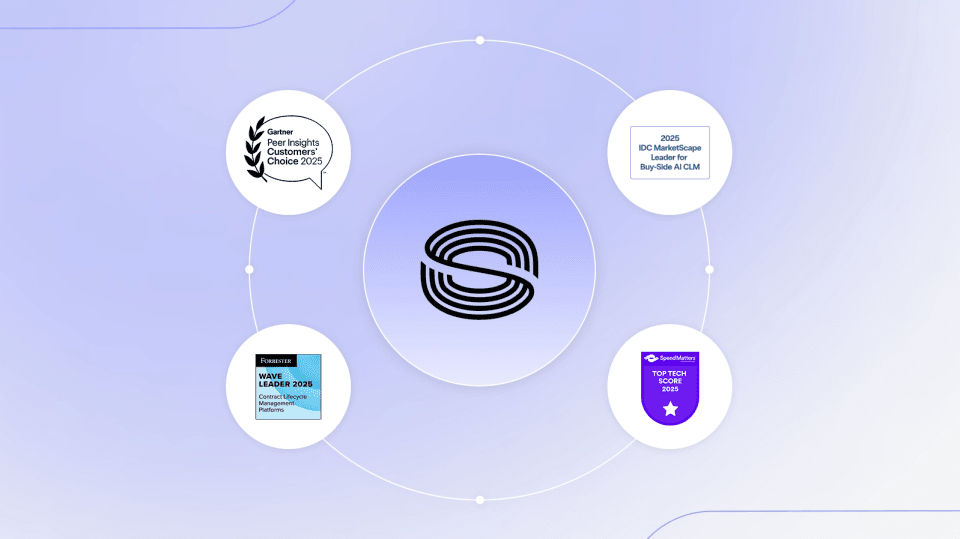
Legal teams use Sirion to enforce SLAs, track obligations, and mitigate risks in real time. Integration with ERP systems, Salesforce, and legacy CLMs ensures seamless interoperability. According to its Microsoft Marketplace listing, Sirion integrates with Salesforce and SAP. Recognized as a Leader in the 2025 Gartner® Magic Quadrant™, Sirion is built to support time-to-value, standardized compliance, and audit readiness across the contract lifecycle—making it a strategic fit for organizations in regulated industries with sophisticated contracting needs. Sirion was also named a Leader in The Forrester Wave™: Contract Lifecycle Management Platforms, Q1 2025, published by Forrester Research, Inc. Its data-driven design and cross-functional visibility help transform contracts from static documents into active sources of business insight.
2. Ironclad
Ironclad is known for its workflow-driven CLM approach, streamlining how legal teams draft, review, and approve contracts. Its AI-assisted tools support redlining, approval routing, and contract analytics, enabling structured collaboration across departments.
Ironclad’s strengths include intuitive workflows and solid automation, making it well suited for teams seeking scalability without compromising control. However, enterprise-level pricing and implementation timelines may make it most appropriate for organizations prepared for a longer-term investment.
3. DocuSign CLM
DocuSign CLM combines contract creation, negotiation, and e-signature in a unified environment. It serves organizations where legal and business teams require consistent visibility across the contract execution lifecycle.
Legal teams gain from its compliance-ready audit trails and deep e-signature integrations. While robust, deployments can be complex, and pricing typically aligns with enterprise-scale operations.
4. Agiloft
Agiloft stands out for its no-code platform that lets legal professionals design and customize workflows without programming expertise. This flexibility supports unique approval chains, contract templates, and compliance checkpoints for tailored legal processes.
While Agiloft enables strong configurability, it can require longer deployment timelines and custom pricing. It’s a good fit for departments with specialized governance or layered review requirements.
5. Icertis
Icertis functions as a global CLM platform for enterprises operating in highly regulated, multi-jurisdictional environments. Its strength lies in compliance management, extensive clause libraries, and analytics that provide deep operational insight.
Legal teams use Icertis to standardize terms and mitigate risk across varied regions and divisions. Integrations with SAP and Salesforce increase enterprise value, though the platform’s broad customization may extend setup time and overall cost.
6. Conga Contracts
Conga Contracts links legal and sales workflows, making it a practical choice for organizations using Salesforce or CPQ systems. It automates approvals, streamlines document generation, and supports standardized templates to maintain legal consistency.
For legal departments closely aligned with sales, Conga provides cohesive quote-to-contract continuity. However, complex configurations can lengthen the onboarding period for teams managing large contract portfolios.
7. Leah
Leah is a contract management platform that streamlines drafting, review, and negotiation for legal and business stakeholders. Its collaborative editor, clause insights, and workflow automation help standardize terms and accelerate approvals while maintaining control.
Teams choose Leah for its simplicity and fast time to value, particularly in commercial contracting workflows. While strong for pre-signature processes and visibility, enterprises that also need extensive post-signature governance may want to evaluate full-lifecycle platforms alongside Leah.
8. Malbek
Malbek delivers a modern CLM with intuitive UX, configurable workflows, and AI-assisted analysis across the contract lifecycle. It offers integrations with core CRM and ERP systems to connect legal, sales, and procurement processes and improve data consistency.
Organizations value Malbek for quick implementations and scalable automation as volumes grow. Advanced requirements—such as complex obligation management or industry-specific compliance—may necessitate additional configuration compared to CLMs purpose-built for highly regulated environments.
9. Coupa
Coupa CLM extends Coupa’s Business Spend Management suite with enterprise-grade contract authoring, clause libraries, and supplier-centric governance. Its strength lies in unifying sourcing, procurement, and contracting data to improve compliance and spend visibility.
Coupa is a strong fit for companies already invested in the Coupa ecosystem and seeking tight alignment between legal and procurement. Deployments can be more involved and typically align with enterprise-scale operations where cross-system integration and change management are priorities.
10. LinkSquares
LinkSquares provides AI-powered analytics and post-signature intelligence that turn static contracts into actionable insights. The platform focuses on clause extraction, obligation tracking, and search functions to enhance legal operations.
LinkSquares focuses primarily on post-signature analytics; buyers who also need pre-signature workflows may want to evaluate full-lifecycle platforms alongside it.
How to Choose the Right CLM Platform
Not all CLM platforms are built the same. Some specialize in specific stages of the contract lifecycle, while others provide end-to-end capabilities.
- Pre-signature focused tools (e.g., Ironclad, Leah) emphasize drafting, workflows, and approvals
- Post-signature tools (e.g., LinkSquares) focus on analytics and obligation tracking
- Full lifecycle platforms (e.g., Sirion, Icertis) connect authoring, negotiation, execution, and performance into a unified system
For enterprises managing complex, high-value contracts across multiple functions, full lifecycle platforms are designed to provide visibility and control across both pre-signature and post-signature stages. When evaluating any vendor at enterprise scale, verify security certifications directly — for example, Sirion’s UK Government G-Cloud listing states it is ISO/IEC 27001 certified, accredited by BSI Group.
Conclusion
Choosing the right contract management platform depends on the complexity of your contracts, the level of governance required, and how deeply contracts need to integrate with business processes.
While many tools excel in specific areas—such as workflow automation, analytics, or ease of use—enterprise organizations often require a unified system that connects the entire contract lifecycle.
Platforms like Sirion stand out by combining AI-driven intelligence, cross-functional workflows, and post-signature performance management into a single platform—enabling legal teams to move beyond contract administration toward strategic value creation.
Frequently Asked Questions (FAQs)
What key features should legal teams look for in contract management software?
Legal teams should seek centralized repositories, automated approval workflows, AI-driven clause extraction, obligation tracking, and integrations with core business systems such as ERP or CRM platforms.
How does AI improve contract management for legal teams?
What are typical implementation timelines and challenges?
How can legal teams balance ease of use with enterprise-grade capabilities?
What factors influence the pricing of contract management software?
Sirion is the world’s leading AI-native CLM platform, pioneering the application of Agentic AI to help enterprises transform the way they store, create, and manage contracts. The platform’s extraction, conversational search, and AI-enhanced negotiation capabilities have revolutionized contracting across enterprise teams – from legal and procurement to sales and finance.
Additional Resources

How to Set Up Contract Management Tools for Remote Legal Teams in 2026
 12 min read