
How a CLM System Helps at Every Stage of a Contract
Contracts don’t just appear out of nowhere and vanish after signing. They move through a series of stages, and good management means understanding each phase to reduce risk and improve outcomes. Here’s a broadly accepted view of the contract lifecycle that CLM systems help manage:
Contracts progress through a defined set of stages — from the initial idea of an agreement to renewal or closure. A modern contract management system helps orchestrate this entire journey seamlessly, ensuring control, visibility, and compliance at every step.
1. Initiation
This stage begins with identifying the need for a new contract — such as engaging a vendor, renewing a service, or onboarding a customer. Teams outline objectives, scope, and key commercial terms.
2. Authoring
Contracts are drafted using standardized templates and clause libraries to ensure legal consistency and faster turnaround. Automated authoring tools reduce manual effort and maintain compliance.
3. Negotiation and Review
Both parties collaborate on terms, make redlines, and review edits. Version control and audit trails in CLM system ensure transparency and prevent miscommunication.
4. Approval
Before execution, contracts route through internal approval workflows — legal, finance, or executive — based on predefined rules. Automated reminders prevent bottlenecks.
5. Execution
Once approved, contracts move to the signing stage. With integrated e-signature tools, organizations can finalize agreements quickly and securely, without paper-based delays.
6. Obligation & Performance Management
Post-signature, the CLM system tracks obligations, deliverables, and KPIs to ensure all parties fulfill their commitments. This stage often ties into invoice validation, SLA tracking, and vendor performance monitoring.
7. Compliance & Risk Management
CLM systems help enforce regulatory compliance by mapping contractual terms to policies and legal standards. Alerts notify teams of potential non-compliance or risk exposures.
8. Monitoring & Reporting
Analytics dashboards provide visibility into contract performance, cycle times, and risk hotspots. Regular reporting supports informed decision-making and continuous improvement.
9. Renewal & Termination
As contracts near expiration, the CLM system triggers automated renewal alerts. Teams can proactively renegotiate, extend, or close agreements, ensuring no unwanted auto-renewals or missed opportunities.
For anyone new to contract management, having this lifecycle visualization clarifies how CLM system orchestrate complex processes and maintain business continuity.


Key Features of Contract Management Systems Explained
While specific CLM systems offer varying capabilities, certain features are foundational and widely common across solutions:
1. Contract Templates and Clause Libraries
Templates and pre-approved clauses standardize contract language, reducing drafting time and legal risks. For instance, an NDA template can be customized quickly per deal, maintaining compliance without reinventing the wheel.
2. Automated Workflows and Approvals
Automating contract routing and approval steps eliminates bottlenecks and ensures proper stakeholders review contracts on time. Alerts and task assignments keep processes moving smoothly.
3. Electronic Signature Integration
Digital signing capabilities accelerate execution while maintaining legality and audit records. E-signatures reduce delays associated with physical documents and promote faster deal closure.
4. Centralized Contract Repository
A secure, searchable digital storage simplifies retrieval and ensures only authorized users access sensitive agreements. Metadata tagging allows quick filtering, whether by contract type, renewal date, or party.
5. Obligation and Renewal Tracking
Systematic monitoring of contract milestones prevents missed deadlines or auto-renewals. Notifications can be set for key dates such as payment schedules or compliance checks.
6. Advanced Analytics and Reporting
Data-driven insights reveal patterns in contract performance, risk hotspots, and cycle times. For example, visualization dashboards might highlight late deliveries or cost leakage across supplier agreements.
Many systems also offer integration with ERP, procurement, or CRM solutions, enabling seamless data sharing and comprehensive commercial oversight.
Key Benefits of a Contract Management System
A contract management system delivers value beyond storing agreements by improving how contracts are created, reviewed, governed, and scaled across the organization. Its benefits span usability, collaboration, and measurable business impact.
1. Content & Usability
A contract management system simplifies contract creation through intuitive, no-code authoring tools that allow legal and business users to draft, edit, and manage contracts without technical support. Centralized storage of contracts, templates, and clauses ensures consistency and easy access across teams. Built-in scheduling and milestone tracking help organizations manage renewals, reviews, and obligations on time.
2. Teamwork & Workflow
With defined roles and permissions, a contract management system enables secure collaboration across legal, sales, procurement, and finance teams. Real-time updates, version control, and change tracking prevent errors and conflicting edits. Automated workflows for review, approval, and escalation streamline processes, reduce manual follow-ups, and keep contracts moving efficiently through each stage.
3. Business Advantages
By reducing dependence on manual processes and external support, a contract management system lowers operational costs over time. Its scalable architecture supports growing contract volumes and evolving business needs. Built-in security, regular updates, and access controls protect sensitive data, while integrations with CRM, ERP, and other systems enable seamless contract-driven operations across the enterprise.
How a CLM System Works with Other Business Systems?
A common question from beginners is how CLM system compares to or integrates with other enterprise systems like CRM or ERP:
- CRM (Customer Relationship Management) focuses on managing leads, customer interactions, and sales pipelines. It generally stops short of detailed contract governance.
- ERP (Enterprise Resource Planning) supports core business processes like finance, procurement, and operations but often lacks specialized contract lifecycle tracking.
- CLM sits at the intersection, managing contracts as strategic business assets—linking negotiation, compliance, obligations, and performance data.
Integration across these systems creates an end-to-end flow of commercial information, from opportunity through execution to ongoing management.
Types of Contracts Management Systems Handle Across Industries
To put concepts into context, here are some typical contract types handled:
- Healthcare: Patient service agreements, supplier contracts, insurance reimbursements.
- Manufacturing: Vendor purchase orders, quality agreements, maintenance contracts.
- Financial Services: Client agreements, investment contracts, compliance documentation.
- Technology: Software license agreements, service-level agreements, distribution contracts.
- Retail: Franchise agreements, lease contracts, vendor supply agreements.
Regardless of industry, the underlying purpose remains consistent—to control contractual risk, speed up operations, and improve governance.

How to Choose & Implement the Right Contract Management System
Choosing the right contract management system is as important as implementing it correctly. A poorly selected or poorly implemented system can create new bottlenecks instead of eliminating existing ones. To deliver real value, organizations must align the platform with their contract complexity, business objectives, and internal workflows—then roll it out in a way that drives adoption across teams.
1. Assess Your Needs & Goals
Start by identifying the pain points in your current contract processes, such as delayed approvals, missed deadlines, limited visibility, or growing compliance risks. Define clear objectives—whether that is reducing risk exposure, improving turnaround times, or lowering administrative costs. Involving stakeholders from legal, sales, procurement, finance, and operations ensures requirements reflect real usage. Mapping existing workflows, contract types, ownership, and handoffs provides a strong foundation for system selection and implementation.
2. Consider Relevant Use Cases
Not all contract management systems serve the same use cases. Organizations should shortlist tools based on how they support their most common and complex contract scenarios—such as sales agreements, vendor contracts, or regulated industry contracts. Evaluation should focus on how well the system handles volume, collaboration, approvals, compliance tracking, and reporting in real-world conditions, rather than feature lists alone.
3. Essential Technical & Security Factors
Technical and security considerations play a critical role in choosing a contract management system. The platform must protect sensitive contract data through strong access controls, encryption, and compliance with relevant regulations. Integration capabilities, system performance, and scalability should be evaluated early to ensure the solution remains reliable as contract volumes grow. Addressing these factors upfront helps avoid costly rework and long-term limitations.
4. Vendor & Cost Considerations
The cost of a contract management system varies based on factors such as user licenses, contract volume, functionality, and deployment model. Beyond upfront pricing, organizations should evaluate implementation effort, training, ongoing support, and customer success services. Understanding licensing structures, potential add-on costs, and long-term scalability expenses helps ensure the investment delivers sustained value rather than unexpected costs over time.
Additional Resources
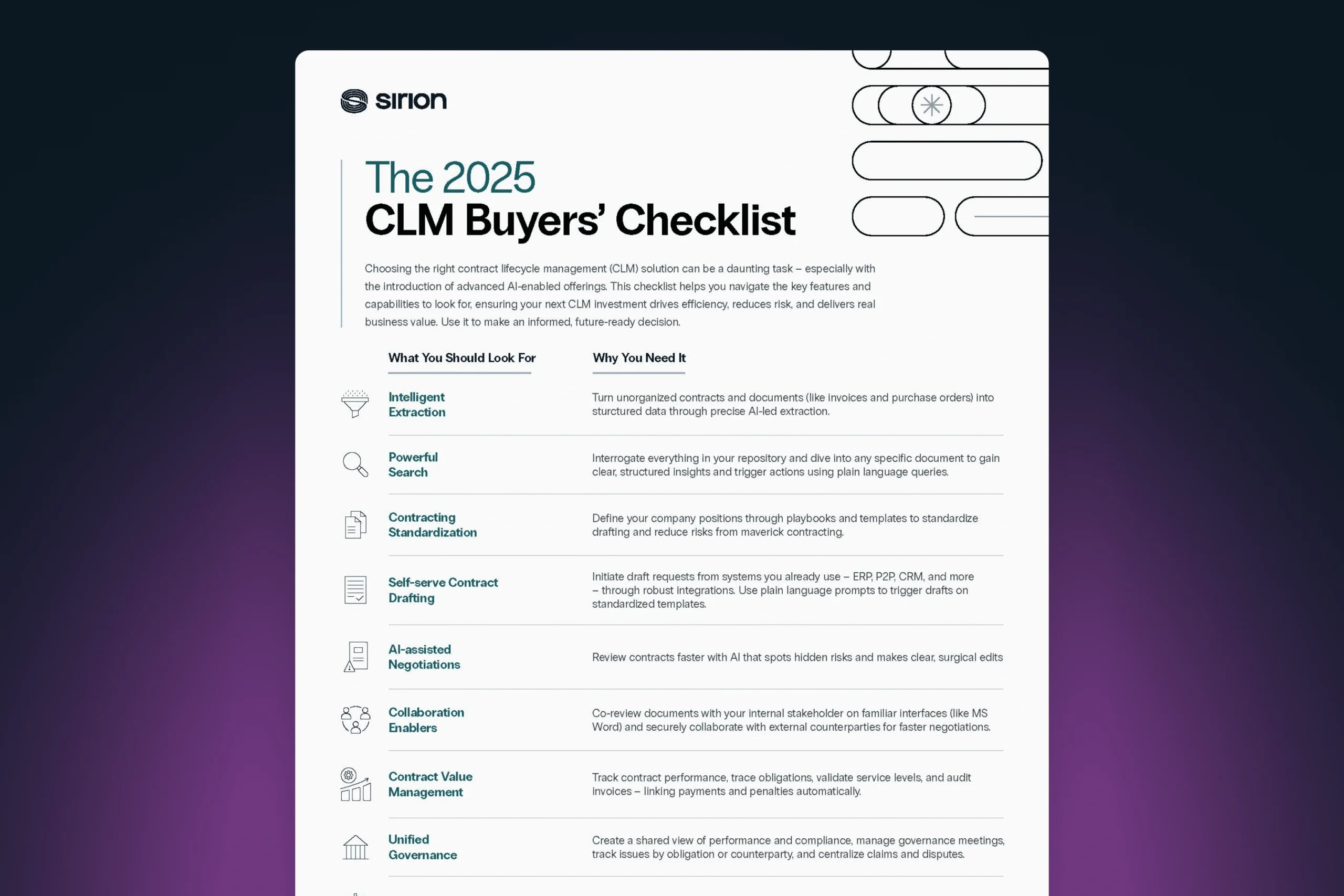
The 2026 CLM Buyers’ Checklist
 10 min read