
A General Counsel (GC), on the other hand, is the senior-most lawyer in the company. They are a strategic leader who manages the entire legal function and sits with the executive team. The role of general counsel is to protect the company by aligning legal strategy with overall business objectives, managing enterprise-wide risk, and leading the legal department—which includes any Legal Counsel on the team.
To make the distinction crystal clear, let’s look at their roles side-by-side. This comparison highlights how their responsibilities, focus, and authority differ within an organization.
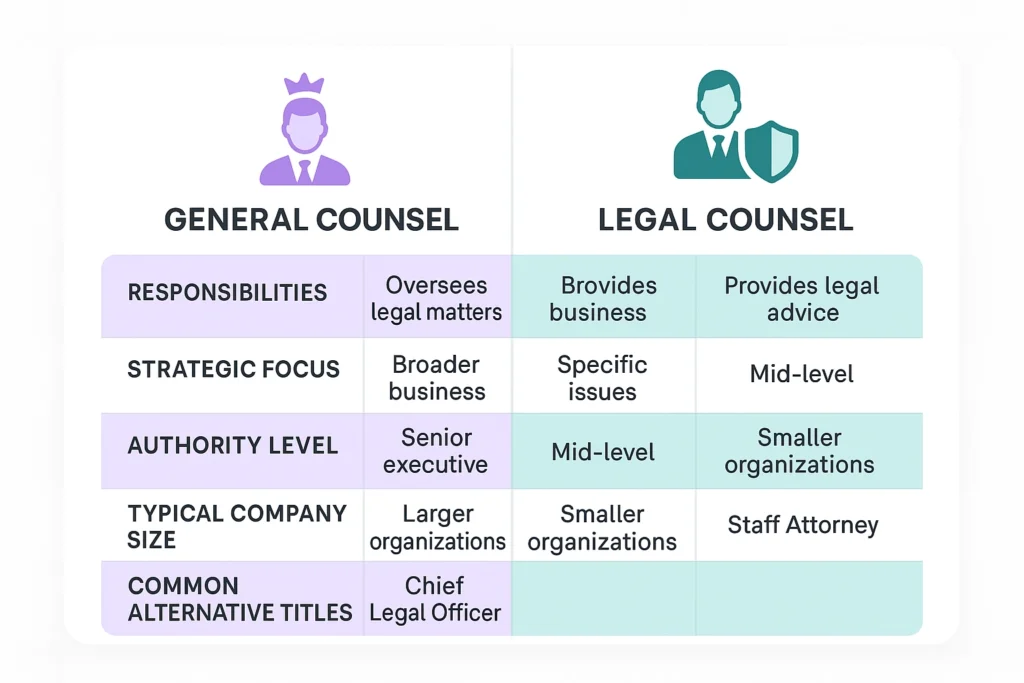
Is a General Counsel a C-Suite Executive?
That’s a great question, and the answer reveals a lot about the evolution of the modern legal department. Yes, in most large or publicly traded companies, the General Counsel is considered a C-suite executive.
Historically, the top lawyer was seen as the “chief naysayer,” brought in to identify problems and stop risky ventures. Today, that role has transformed. The modern general counsel is a strategic business partner, expected to provide guidance that enables growth while managing risk.
This is why you increasingly hear the title Chief Legal Officer (CLO). While often used interchangeably with General Counsel, the chief legal officer title more explicitly highlights the role’s executive status and business-focused responsibilities. A CLO is unequivocally part of the core leadership team, contributing to major decisions about the company’s direction.
Understanding the hierarchy helps clarify these roles. A corporate legal department isn’t flat; it’s a structured team with a clear progression from tactical execution to strategic leadership. The GC or CLO sits at the very top of this structure.
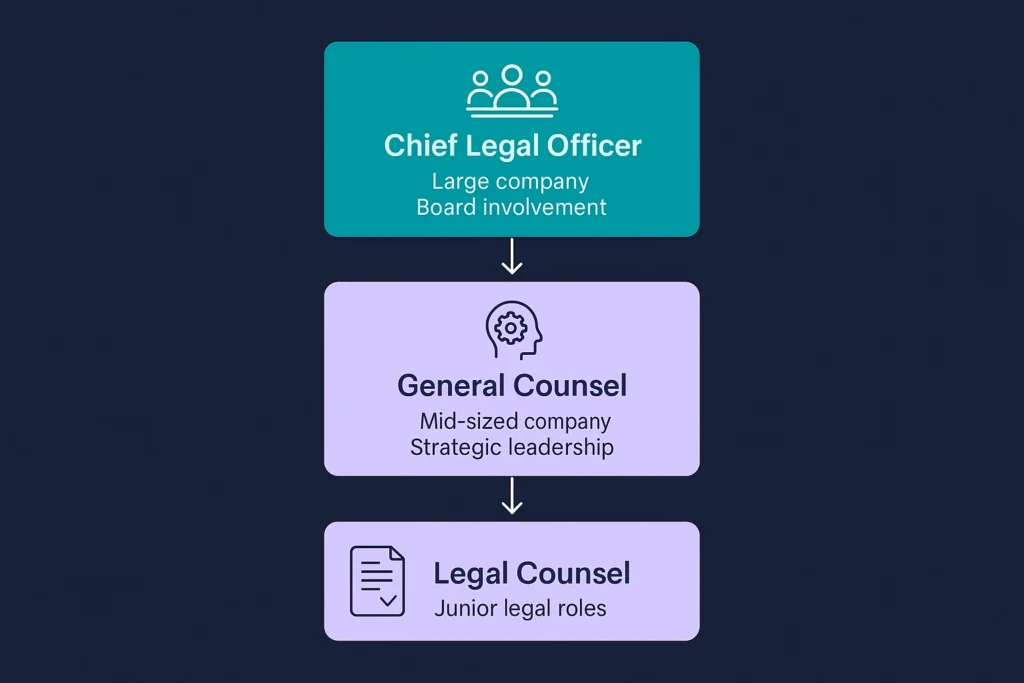
As you can see, Legal Counsel is a foundational role. With experience and a shift toward strategic thinking, a Legal Counsel can advance to Senior Counsel, Deputy General Counsel, and ultimately, General Counsel. This structure ensures that both daily legal tasks and high-level strategy are handled effectively, often with support from a dedicated legal operations team focused on efficiency.
When Should Your Company Hire a General Counsel vs. Legal Counsel?
The answer has everything to do with your company’s stage of growth, complexity, and risk profile. It’s not about which role is “better,” but which is right for you, right now.
Think of building your legal team like constructing a building. You don’t start with the chief architect; you start with a solid foundation and add specialists as the structure grows more complex.
- Early-Stage Startup: At this point, you likely don’t need a full-time in-house lawyer. Your legal needs are sporadic and can be handled by an external law firm (outside counsel) on an as-needed basis for things like incorporation and fundraising.
- Growing Company: Once your business starts scaling, the volume of day-to-day legal work—customer contracts, vendor agreements, HR policies—skyrockets. The cost of sending everything to outside counsel becomes unsustainable. This is the perfect time to hire your first Legal Counsel. This person is a versatile generalist who can manage the daily workload, standardize processes, and become the go-to legal resource for the team.
- Scaling Company & Enterprise: As you enter new markets, develop new products, or consider an acquisition, your risks become more complex. You’re no longer just managing contracts; you’re navigating intellectual property landscapes, complex regulations, and potential litigation. This is when you need a General Counsel. They won’t just manage the legal work; they will build the legal department, implement robust contract risk management frameworks, and provide the executive team with high-level strategic advice to guide the company’s growth.
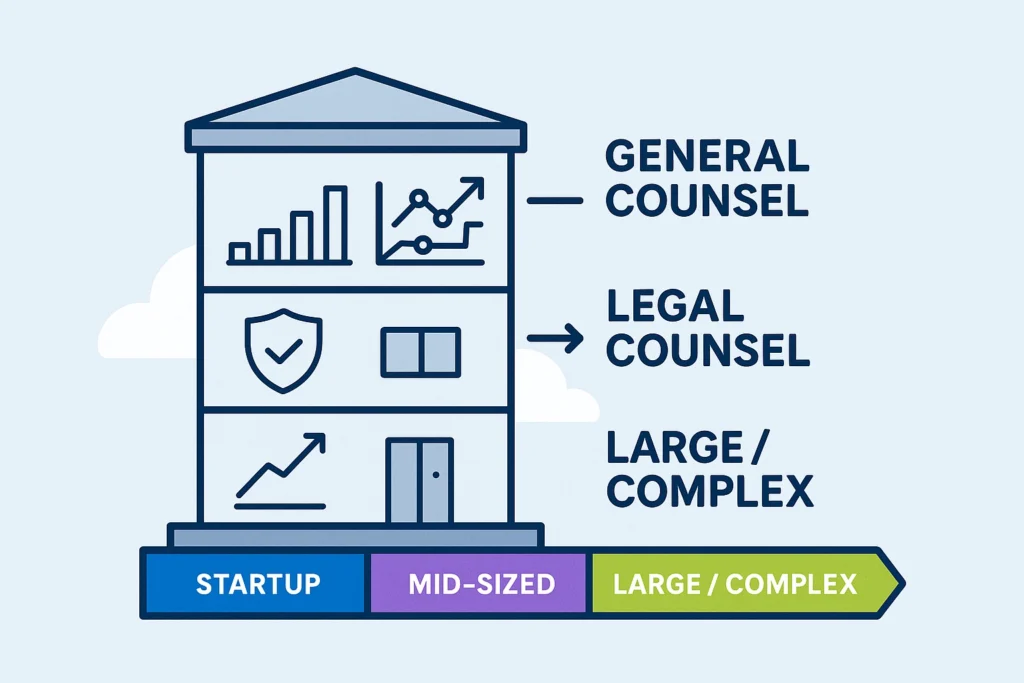
Putting It All Together: A Practical View
The key takeaway is this: Legal Counsel executes legal work, while a General Counsel strategizes and leads the legal function.
Your decision should be based on your primary business pain.
Is your pain tactical? Are you drowning in contracts and routine legal questions? You likely need a Legal Counsel.
Is your pain strategic? Are you facing complex risks, planning major corporate moves, or needing a legal voice in the boardroom? It’s time for a General Counsel.
In many organizations, however, it’s not about choosing one over the other — it’s about making sure both roles work in concert.


The Overlap: How Legal Counsel and GC Work Together
When both roles exist in a company, Legal Counsel and General Counsel form a powerful one-two punch. Legal Counsel manages the operational legal load — drafting agreements, handling compliance checks, and standardizing language — while the General Counsel provides strategic oversight, ensuring that every legal action supports the company’s broader goals.
The real magic happens when these roles are connected through unified processes and shared visibility. Strategic priorities from the GC inform the day-to-day work of the Legal Counsel, while real-time operational insights help the GC make informed decisions at the leadership table. This tight loop is where technology, particularly CLM solutions, becomes a force multiplier.
Without the right systems to connect strategy and execution, even the strongest legal teams encounter roadblocks.
Key Challenges Both Roles Face Without the Right Tools
Even highly experienced legal teams can struggle when processes are fragmented and information is siloed. Common pain points include:
- Missed obligations post-signature due to scattered contract storage.
- Inconsistent terms across different business units.
- High outside counsel costs from repetitive manual reviews.
- Deal delays caused by long review cycles and unclear approval flows.
These challenges impact both Legal Counsel and GCs — slowing down execution, increasing risk exposure, and eroding the business’s ability to act quickly in high-stakes situations.
Addressing these challenges isn’t just about working harder — it’s about transforming how legal work is done.
Your Next Step in Building a Future-Ready Legal Team
Choosing between a General Counsel and a Legal Counsel is far more than a hiring decision—it’s a declaration of your company’s maturity and ambition. By understanding the distinct value each role brings, you can ensure your business has the right legal guidance for the journey ahead.
As your company grows, the legal function will become increasingly integrated into your core business strategy. The right leader, supported by the right processes and technology, will not only protect your company but also help accelerate its success. Embracing modern legal ops best practices and powerful legal solutions will be key to unlocking that potential.


Additional Resources

 9 min read